When I started planning my kitchen renovation, I knew the faucet would be more than just a functional necessity, it would set the tone for the entire space. I’d fallen in love with the farmhouse aesthetic, with its blend of vintage charm and practical design, and finding the perfect faucet became my mission.
After installing a bridge-style faucet with a high-arc spout and cross handles, I finally understood why people obsess over these details. The right farmhouse faucet doesn’t just look beautiful, it makes everyday tasks like washing oversized pots and filling water pitchers genuinely easier and more enjoyable.
Understanding Classic Farmhouse Faucet Styles
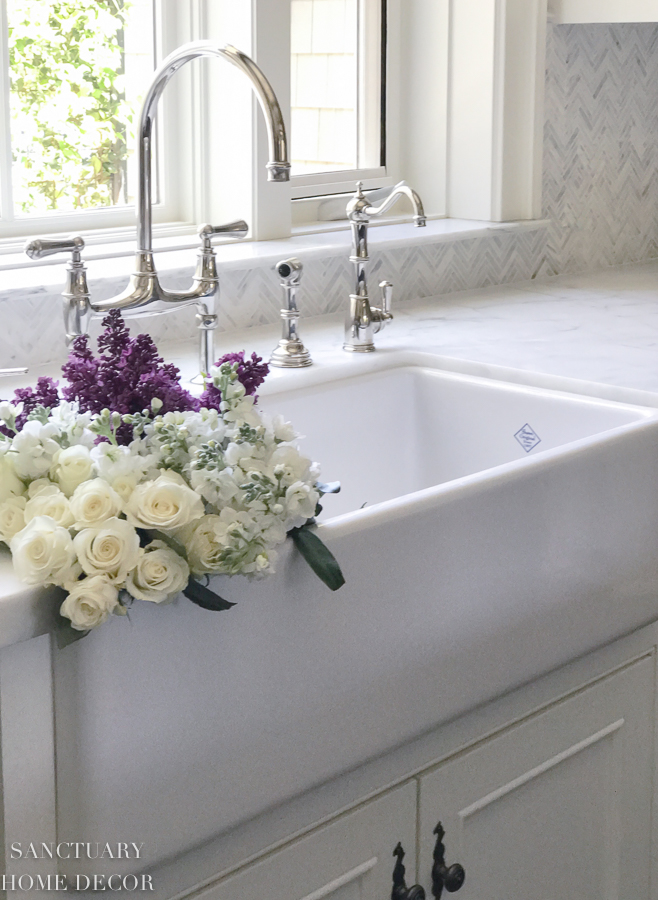
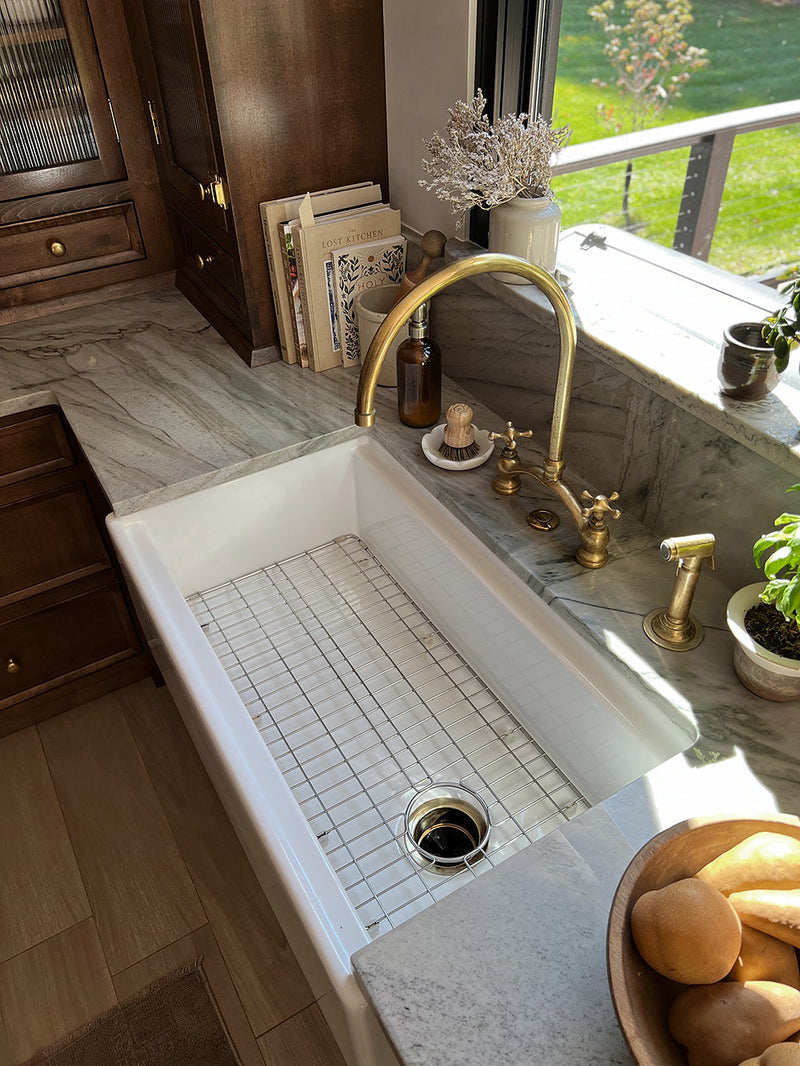
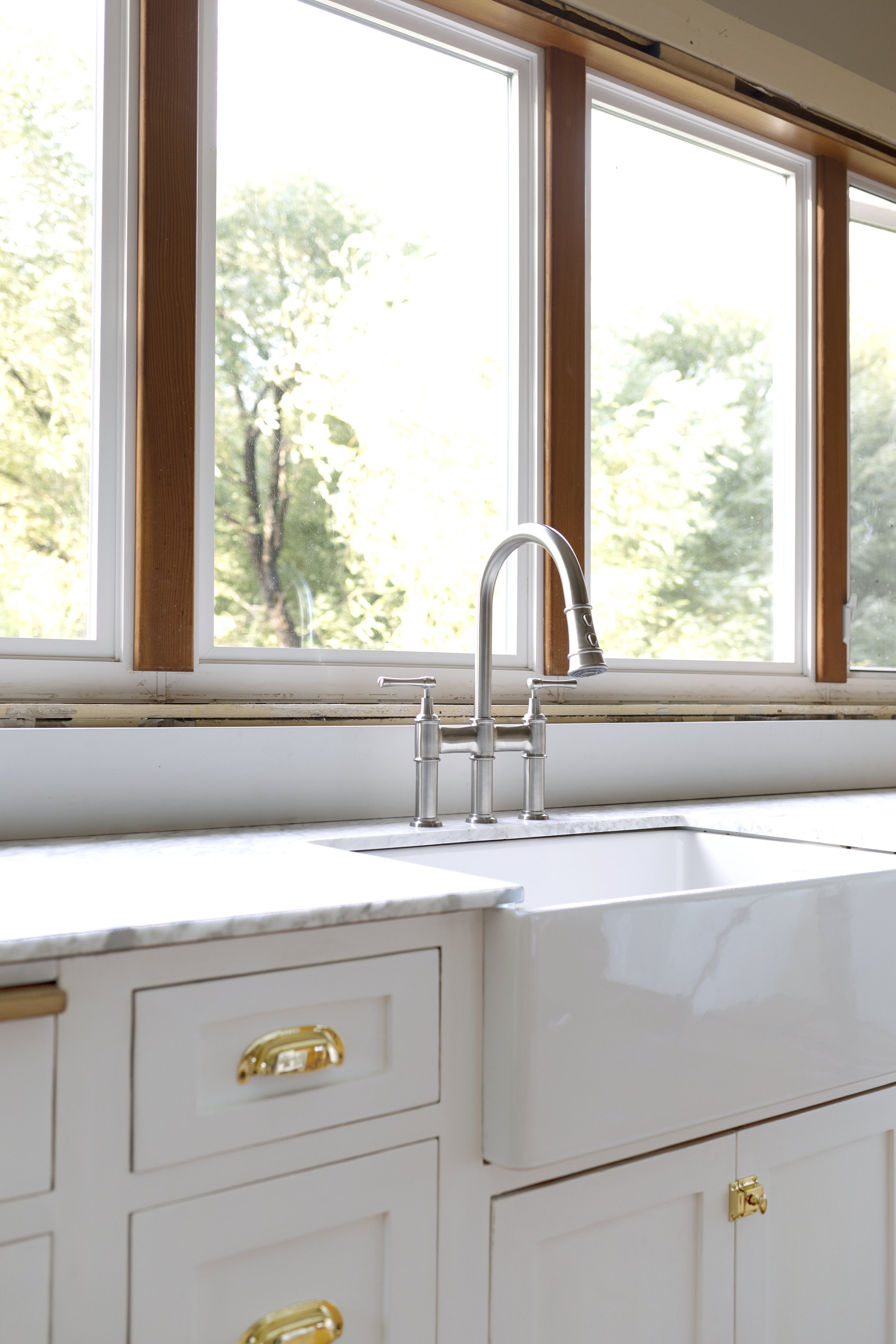
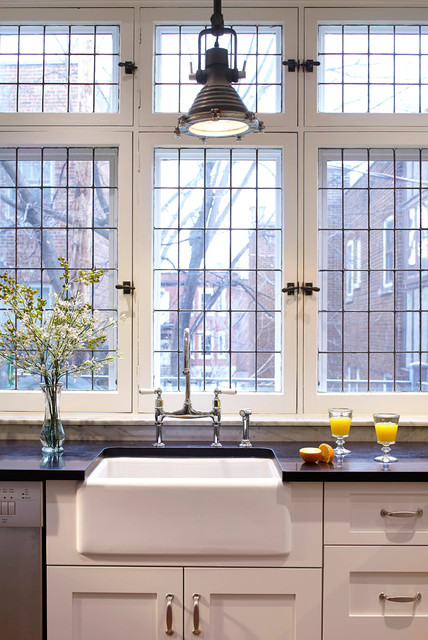
The bridge faucet design captured my heart immediately when I started researching options. This style features visible pipes connecting the hot and cold handles to the spout, creating that authentic vintage look that screams farmhouse charm. I chose one with a gooseneck spout that arches high above my sink, giving me plenty of clearance for tall vases and stock pots. The exposed bridge design does require a bit more cleaning since water can splash on those connecting pipes, but I find the aesthetic payoff worth the extra minute of wiping down.
Wall-mounted faucets were another style I seriously considered before making my final decision. These mount directly to the wall above your sink rather than on the counter or sink deck, which creates an incredibly clean, uncluttered look and makes cleaning around the sink base so much easier.
I visited a friend’s kitchen with a wall-mounted farmhouse faucet, and the vintage industrial vibe was stunning. However, the installation cost scared me off since it requires running plumbing through the wall, which added several hundred dollars to the project budget.
Pull-down farmhouse faucets offer the perfect marriage of traditional style and modern convenience that I ended up loving. While I went with a fixed bridge style, my sister installed a farmhouse faucet with a pull-down spray head, and I’ve been envious ever since.
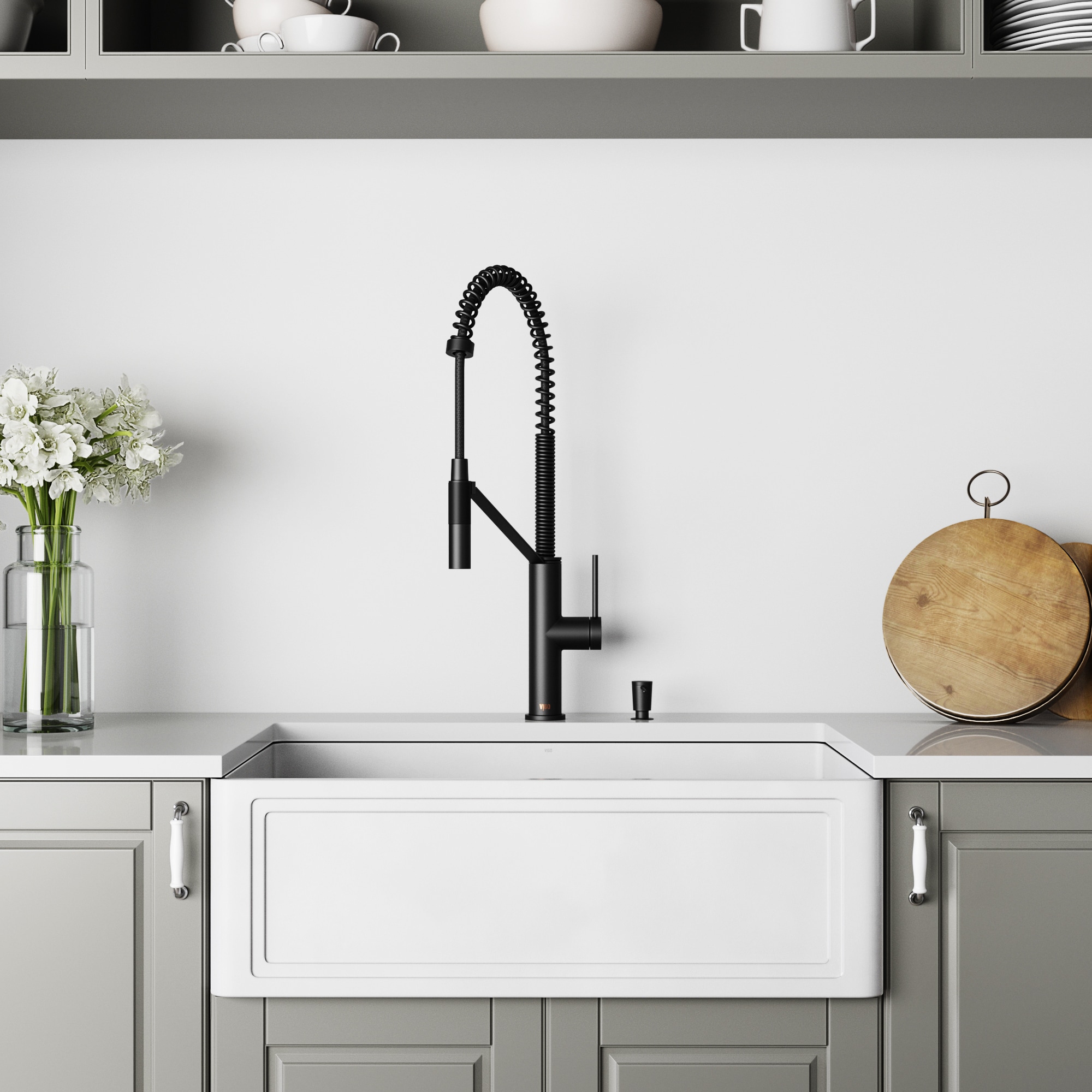
The spray function makes rinsing dishes and cleaning the sink incredibly efficient, and modern versions incorporate this feature while maintaining those classic farmhouse details like exposed springs, cross handles, and oil-rubbed bronze finishes that keep the vintage aesthetic intact.

Choosing Between Finish Options
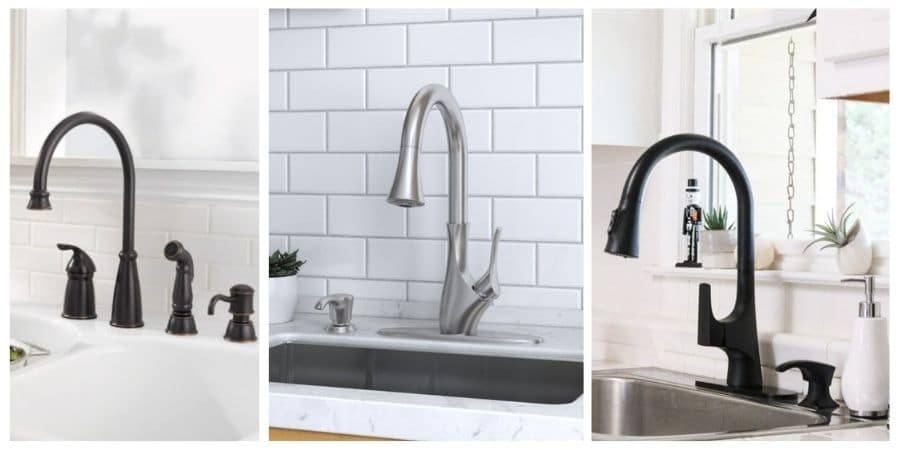
Oil-rubbed bronze was my immediate choice because it perfectly complemented the other hardware in my kitchen. This dark, slightly mottled finish has an aged appearance that looks authentically vintage right out of the box. Over the past two years, I’ve noticed it develops a natural patina where I touch it most frequently, which only adds to its character. Some people worry about this aging process, but I think it makes the faucet look even more genuine and lived-in, exactly what farmhouse style celebrates.
Brushed nickel and stainless steel finishes appeal to people wanting a lighter, brighter farmhouse look. I tested these finishes at showrooms, and they definitely feel more contemporary while still working within farmhouse design parameters. My neighbor chose brushed nickel, and it pairs beautifully with her white subway tile and marble countertops, creating a fresher, airier interpretation of farmhouse style. These finishes also resist fingerprints and water spots better than darker options, requiring less frequent cleaning to maintain their appearance.
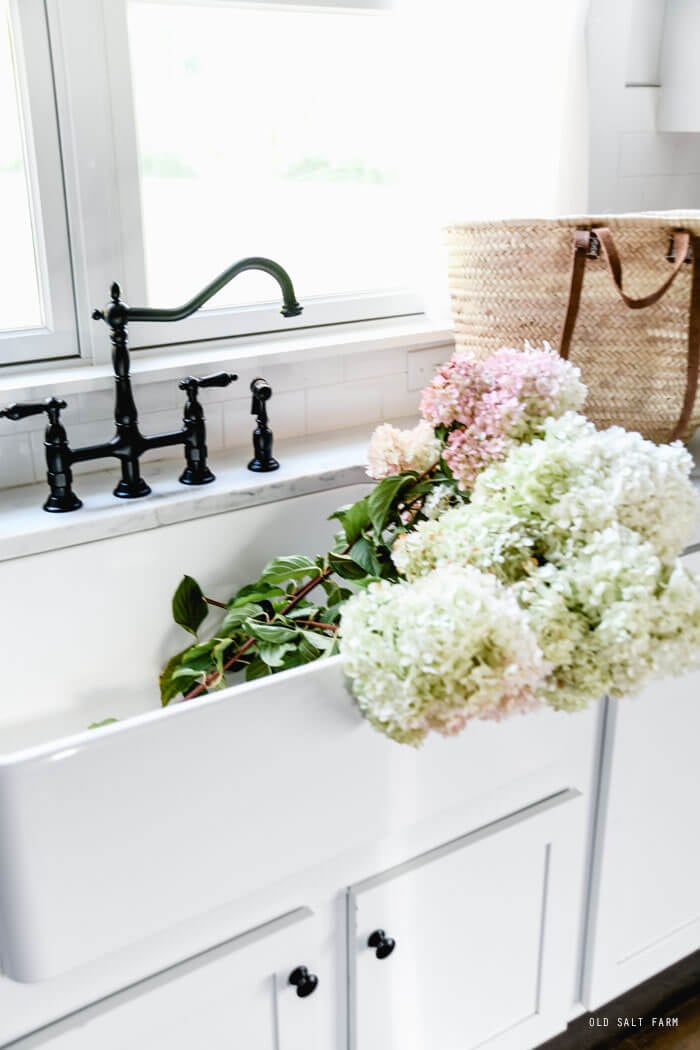
Matte black faucets have exploded in popularity recently, and I’ll admit they create a dramatic statement in farmhouse kitchens. I seriously debated this option because black fixtures against white farmhouse sinks create a stunning contrast. The concern that stopped me was durability. I’ve heard mixed reviews about matte black finishes showing scratches and wear over time. If you go this route, invest in a high-quality finish from a reputable manufacturer rather than cheaper options that might chip or fade within a few years of daily use.

Determining the Right Spout Height and Reach
Spout height matters more than I ever imagined before living with my choices. I selected a high-arc faucet with about 10 inches of clearance between the spout and sink bottom, and this height has been perfect for my needs. I can easily fit my largest pasta pot underneath to fill it, and washing tall vases or pitchers is effortless. Friends with lower-profile faucets constantly complain about not having enough vertical space, which makes simple tasks frustrating.
However, too much height can create its own problems with splashing. I visited a home where the faucet stood nearly 14 inches high, and every time they turned on the water at normal pressure, it splashed everywhere. The sweet spot for most farmhouse sinks seems to be between 9 and 11 inches of clearance. Consider your sink depth, too. If you have a particularly deep farmhouse sink, you might accommodate a taller spout without splash issues, but shallow sinks need more moderate heights.
Spout reach is the horizontal distance from the faucet base to where water flows out, and getting this wrong means water doesn’t hit the center of your sink. My faucet has an 8-inch reach that positions the water stream perfectly in the middle of my 33-inch farmhouse sink. I measured carefully before purchasing, and I’m grateful I did because returning a faucet after installation would have been a nightmare. Measure from where your faucet will mount to your sink’s center, then choose a reach that gets water flowing in that sweet spot.
Installation Considerations and Requirements
Installing my farmhouse faucet was more complex than the builder-grade faucet I replaced. Bridge faucets require three holes in your sink or countertop, one for each handle and one for the spout, spaced according to the manufacturer’s specifications. My sink came pre-drilled with the correct spacing, but if yours doesn’t, you’ll need to drill those holes precisely or consider a different faucet style. I measured everything three times before drilling because mistakes in granite or porcelain are permanent and expensive.
The plumbing connections underneath proved trickier than I expected. Farmhouse faucets often have longer supply lines and more complex configurations than standard faucets due to their bridge design or unique mounting systems. I initially tried installing it myself, but ended up calling a plumber after wrestling with it for two hours. The professional took 45 minutes and charged $125, which felt worth it for peace of mind knowing everything was properly sealed and wouldn’t leak later.
Water pressure requirements are something I wish I’d researched earlier. Some farmhouse faucets, especially those with spray features or multiple functions, need adequate water pressure to perform properly. My home has good pressure, around 60 PSI, which works perfectly. If your home has low pressure, test it before buying an elaborate faucet, or you might end up with disappointing flow rates. Simple pressure gauges are inexpensive and attach to any faucet or hose connection for quick testing.
Matching Your Faucet With Farmhouse Sink Styles
My white fireclay farmhouse sink pairs beautifully with my oil-rubbed bronze faucet, creating that classic contrast everyone pictures when they think of farmhouse kitchens. The deep white sink shows off the dark faucet hardware, and vice versa, each element enhancing the other. I’ve seen people try to match white sinks with chrome or polished nickel faucets, and while it can work, the contrast approach creates more visual interest and authentic farmhouse character in my opinion.
Stainless steel farmhouse sinks present different pairing challenges. My sister has one, and she struggled with faucet selection because too much stainless can look commercial rather than homey. She ultimately chose a bridge faucet with a brushed gold finish that warmed up the cool steel sink beautifully. If you have stainless, consider finishes with warmer tones like bronze, brass, or copper to balance the industrial feel and maintain that cozy farmhouse atmosphere.
Colored farmhouse sinks like black, navy, or even sage green are trending now, and they require thoughtful faucet pairing. I helped a friend select a faucet for her matte black fireclay sink, and we went with brushed nickel to create contrast without competing tones. Matching black-on-black looked too monotone and lost the architectural interest that makes farmhouse style so appealing. When working with colored sinks, bring home faucet samples if possible, or at a minimum, look at photos of similar combinations before committing.
Maintenance and Long-Term Durability Factors
Keeping my farmhouse faucet looking good requires different care than my old faucet needed. The oil-rubbed bronze finish shouldn’t be cleaned with harsh chemicals or abrasive scrubbers, which can strip the protective coating and damage the patina. I wipe it down daily with just a soft cloth and warm water, then dry it thoroughly to prevent water spots. Once a week, I use a mild soap solution for deeper cleaning, avoiding anything with ammonia, bleach, or acidic ingredients.
The finish quality directly impacts how well your faucet ages over time. I invested in a faucet from a reputable manufacturer with a solid brass body and premium finish, and it still looks nearly new after two years of heavy use. Cheaper faucets with thin finishes or zinc bodies start showing wear quickly, with finishes flaking or tarnishing within months. My initial faucet budget was $200, but I stretched it to $350 for better quality, and that extra investment has absolutely paid off in durability and appearance.
Internal components matter just as much as external appearance for long-term satisfaction. I specifically chose a faucet with ceramic disc valves rather than compression valves because they last longer and resist leaks better. The manufacturer offers a lifetime warranty on the internal mechanisms, which gave me confidence in my purchase. Check what’s actually covered by warranties; some only cover finishes or specific parts while excluding labor costs for repairs or replacement. Read the fine print before buying so you know what protection you actually have.
Are farmhouse faucets more expensive than regular faucets?
Generally yes, though prices vary widely. I paid $350 for mine, which was about $150 more than comparable standard faucets. The bridge design and specialty finishes add cost. Quality farmhouse faucets typically range from $200-600, though high-end options exceed $1000. You can find cheaper versions around $100-150, but I’d caution against them based on reviews showing finish problems and leaks. Investing in quality pays off with better performance and longevity.
Do farmhouse faucets require special cleaning products?
Not special products, but gentler ones than you might use on chrome faucets. I clean mine with just warm water and mild dish soap on a soft cloth, avoiding anything abrasive or chemical-heavy. Oil-rubbed bronze and matte black finishes especially need gentle care since harsh cleaners strip protective coatings. Never use bleach, ammonia, or abrasive pads. Natural patina development on bronze finishes is normal and desirable, not something requiring aggressive cleaning to remove.
Can I install a farmhouse faucet on any sink?
It depends on your sink’s hole configuration. Bridge faucets need three properly-spaced holes, typically 8 inches apart, for the outer handles. Single-hole farmhouse-style faucets exist if your sink only has one hole. Wall-mount faucets need no sink holes but require wall plumbing access. Measure your existing holes carefully and match them to faucet requirements, or be prepared to drill new holes if your sink material allows. Some sinks aren’t compatible with certain faucet styles.
How long do farmhouse faucets typically last?
With proper care, quality farmhouse faucets last 15-20 years or more. Mine is two years old and performing perfectly. The ceramic disc valves in good faucets rarely fail, and solid brass bodies don’t corrode like cheaper materials. Finishes might develop patina or show wear after 5-10 years, depending on use and care, but that aged look often enhances farmhouse style. Budget faucets with inferior materials might need replacement within 3-5 years, another reason I recommend investing in quality.

Do pull-down spray functions work with farmhouse styling?
Absolutely, and many modern farmhouse faucets incorporate this feature beautifully. My sister’s farmhouse faucet has a pull-down spray hidden within the spout, maintaining the vintage bridge aesthetic while adding modern functionality. Look for models with coiled metal springs on the hose, which blend with farmhouse style better than plastic versions. The key is choosing designs where the modern feature complements rather than contradicts the traditional styling elements.
What water pressure do farmhouse faucets need?
Most work fine with standard residential pressure between 40-80 PSI. Mine performs perfectly at 60 PSI. If you have low pressure below 40 PSI, simple single-stream faucets work better than complex multi-function models. High pressure above 80 PSI can cause splashing and wear on internal components, potentially requiring a pressure regulator. Test your home’s pressure with an inexpensive gauge before shopping. If pressure is borderline, choose simpler faucet designs without spray functions for best results.

Farmhouse Kitchen Faucets for Farmhouse Sinks

Farmhouse Kitchen // Our new Sink and Faucet!
Which Faucet Goes With a Farmhouse Sink?
Best Faucet For Farmhouse Sink – Farmhouse Kitchen Ideas

Related Posts: