When I bought my 1950s ranch house eighteen months ago, the kitchen had been “updated” in the worst possible way with builder-grade granite and oak cabinets that stripped away all the original charm. I became obsessed with restoring authentic mid-century character, and that journey led me to retro kitchen countertops.
After extensive research, some expensive mistakes, and finally getting it right, I now have a kitchen that feels true to its era while being completely functional for modern life. Let me share everything I learned about choosing, installing, and living with retro countertops that honor the past without sacrificing practicality.
Understanding Classic Retro Countertop Materials
My education about retro countertops started with learning what materials were actually popular in different decades. The 1950s brought us colorful laminate in bold patterns, boomerang designs, and those iconic sparkled surfaces with metallic flecks. These Formica countertops came in amazing colors like turquoise, pink, yellow, and mint green that defined the era’s optimistic aesthetic. I was surprised to learn that many original installations are still functional today, which speaks to their durability despite being perceived as a budget material.
The 1960s and early 1970s continued the laminate trend but introduced new patterns like butcher block looks, Mediterranean tile prints, and bold geometric designs. I fell in love with the harvest gold and avocado green options that defined this era, though I knew these colors would be polarizing. Stainless steel also gained popularity during this period, particularly in modernist kitchens where the industrial aesthetic was embraced. The clean, reflective surface represented the space-age optimism of the era.
Tile countertops had their moment, too, particularly in the 1970s and early 1980s. Ceramic tile in earthy tones, often with decorative inserts or trim pieces, created that warm, handcrafted look. I considered tile, but ultimately decided the grout maintenance would be impractical for my busy lifestyle.
Understanding these material options and their historical context helped me make an informed decision about which direction would work best for authenticity, aesthetics, and my actual needs as someone who cooks daily.
Finding Authentic Vintage Laminate Patterns
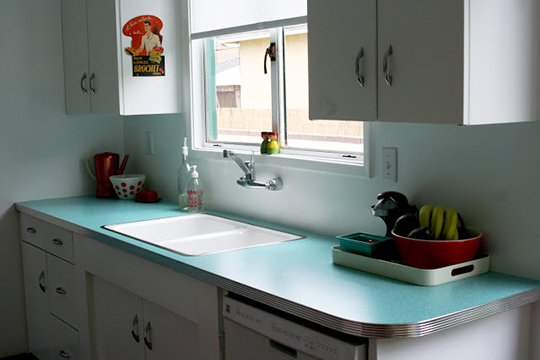
The hunt for authentic retro laminate became an obsession once I decided to go that route. Modern reproductions exist, but I wanted the real deal with genuine Formica or Wilsonart patterns from the era. I discovered that some original patterns are still manufactured, though finding suppliers required serious detective work. Companies like Formica actually maintain archives of vintage patterns, and certain designs can be special-ordered, though at premium prices and with lengthy lead times.
I connected with vintage building material suppliers who specialize in retro renovation projects. These businesses salvage countertops from demolition projects and also stock new-old-stock laminate sheets from decades past. I found an incredible supplier in Oregon who had unused laminate from the 1960s still in original packaging. The pattern I chose, a boomerang design in turquoise and gray called “Skylark,” was absolutely perfect for my vision.
The condition of vintage laminate varies dramatically, and I learned to assess quality before purchasing. Unused sheets or salvaged sections in excellent condition can work beautifully, but pieces with deep scratches, burns, or delamination aren’t worth saving, regardless of how perfect the pattern is. I examined everything carefully, looking for intact edges, consistent color without fading, and no bubbling or separation from the substrate. This careful vetting ensured I invested in materials that would last another several decades.

Modern Fabrication with Vintage Materials
Finding a fabricator willing to work with vintage laminate proved surprisingly challenging. Many countertop professionals prefer working with current materials they know and understand. I called at least fifteen local shops before finding someone experienced with retro laminate who appreciated the project’s authenticity goals. This fabricator had actually worked with these materials when they were new, which gave him insights about proper installation techniques that younger fabricators lacked.
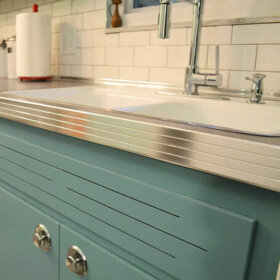
The fabrication process for laminate countertops hasn’t changed dramatically, but working with vintage materials required extra care. The laminate sheets I’d sourced were slightly brittle from age, requiring gentle handling and specialized adhesives. My fabricator used contact cement specifically formulated for laminate bonding and took extra time ensuring proper adhesion. He also created the iconic metal edge trim in aluminum that was popular in the 1950s and 1960s, which required custom fabrication since modern countertops rarely use this detail.
Installation took longer than modern countertop projects because of the specialized nature of the work. The fabricator templated everything twice to ensure accuracy, then dry-fitted the pieces before final installation. The metal edge trim required precise bending and fitting, and we used period-appropriate screws and mounting techniques where visible. The attention to detail and craftsmanship elevated the project from a simple renovation to an authentic restoration. The total cost was about $3,500 for materials and installation, comparable to mid-range quartz but with infinitely more character.

Balancing Authenticity with Modern Functionality
One of my biggest challenges was maintaining period authenticity while incorporating modern conveniences that didn’t exist in the 1950s. I wanted an undermount sink for easier cleaning, but authentic retro countertops used drop-in sinks with metal rims. After much deliberation, I compromised by using a period-appropriate drop-in sink in white porcelain with a chrome rim, which looked authentic while providing good functionality. Sometimes honoring the era means accepting minor inconveniences.
I also had to consider how modern appliances would integrate with retro countertops. My vintage laminate needed to accommodate a modern dishwasher and garbage disposal that didn’t exist when these kitchens were originally built. My fabricator created custom openings that maintained the countertop’s integrity while allowing proper appliance installation. We carefully planned all cutouts for the sink, faucet, and any electrical outlets to minimize visible holes that would detract from the clean vintage aesthetic.
The backsplash decision required thoughtful consideration to complete the retro look without creating maintenance nightmares. Original retro kitchens often had laminate backsplashes or simple painted walls, but I wanted something more practical, given my cooking style. I chose 4×4-inch ceramic tiles in a soft aqua that complemented my turquoise laminate perfectly. The tile provides practical protection while the small format and simple layout feel appropriate for the era. Metal trim pieces where the countertop meets the backsplash add authentic finishing details.

Living with Retro Laminate: The Reality
After eighteen months of daily use, I can provide honest feedback about living with vintage laminate countertops. The durability has genuinely impressed me. Despite frequent cooking, the surface shows minimal wear and no significant damage. Small scratches have appeared near the sink area, but they blend into the pattern’s busy design and add to the authentic vintage character. I use cutting boards religiously and trivets for hot pots, basic care that protects the laminate just like any countertop material.
Cleaning is remarkably easy, which surprised me given laminate’s reputation as a budget material. I wipe the counters daily with warm, soapy water or all-purpose cleaner, and they look perfect. The smooth surface doesn’t harbor bacteria like porous materials can, and spills wipe away instantly. I avoid abrasive cleaners and scrub pads that could dull the finish, but gentle cleaning maintains the original luster beautifully. The metal edge trim occasionally needs polishing to prevent tarnish, but this takes just minutes monthly.
The reactions from guests and visitors have been overwhelmingly positive, though occasionally mixed. Most people love the bold color and authentic vintage aesthetic, asking questions about where I found the materials and how much the project cost. A few have questioned why I’d choose laminate over granite or quartz, but once they understand the intentional design choice honoring the home’s history, they appreciate the vision. The countertops have become a conversation piece that makes my kitchen memorable and distinctly mine.

Styling and Coordinating the Complete Retro Kitchen
Creating a cohesive retro kitchen meant coordinating the countertops with cabinets, appliances, and accessories that supported rather than competed with the vintage aesthetic. I painted my cabinets white to provide a clean contrast against the busy turquoise laminate pattern. The simplicity of white cabinets lets the countertops be the star while maintaining that classic 1950s kitchen feeling. Chrome hardware in period-appropriate styles completes the cabinet look without overwhelming the space.
Finding era-appropriate appliances proved challenging since I needed modern efficiency and features. I chose a retro-style refrigerator from Big Chill in turquoise that matches my countertops perfectly, creating a cohesive color story. The range is a modern stainless model because vintage stoves don’t meet current safety standards and lack features I need for serious cooking. I’ve learned to accept that complete authenticity isn’t always practical, and thoughtful compromises can work beautifully.
Accessories and small details complete the retro kitchen transformation. I display vintage canisters, a retro-style toaster, and period-appropriate dish towels that reinforce the aesthetic without feeling theme-park kitsch. Open shelving displays colorful vintage dishes, including Fire-King and Pyrex pieces that add pops of complementary color. Modern conveniences like my coffee maker and stand mixer stay hidden in cabinets when not in use, maintaining the clean retro lines I love.

Where can I find authentic vintage laminate patterns for countertops, and are they expensive?
I found mine through vintage building material suppliers and companies that specialize in retro renovation. Formica maintains some vintage patterns you can special-order. Expect to pay premium prices, $150-300 per sheet, compared to $50-100 for modern laminate. Salvaged materials from demolitions can be cheaper but require careful quality assessment. Online forums and Facebook groups for mid-century renovation also connect buyers and sellers.
Are retro laminate countertops durable enough for daily cooking and family use?
Absolutely! My 1960s pattern laminate handles daily cooking beautifully. The key is basic care, using cutting boards and trivets for hot items. Laminate resists stains and scratches better than many expect. Original 1950s installations still function today, proving durability. Modern installation techniques and adhesives make new installations even more durable. It’s practical and beautiful, not just a decorative choice.

How do I find a fabricator willing to work with vintage laminate materials?
I called numerous shops before finding someone experienced with retro materials. Look for older fabricators who worked with laminate in its heyday, or shops specializing in custom or restoration work. Ask about experience with metal edge trim and older installation techniques. Expect to pay more for specialized knowledge, but it’s worth it for proper installation that honors the materials.
Can I mix retro countertops with modern appliances without ruining the aesthetic?
Yes, with thoughtful choices! I use a retro-style refrigerator with a modern stainless steel range and dishwasher. The key is keeping appliances simple and avoiding ultra-contemporary styles that clash. Panel your dishwasher to match cabinets, choose classic appliance styles rather than trendy ones, and focus on functionality over flashy features. The countertops can anchor a vintage aesthetic even with some modern elements.

Will bold retro countertop colors make my kitchen feel dated or hurt resale value?
This depends on your market and perspective. My real estate agent warned bold colors might limit buyers, but design-savvy buyers appreciate authentic vintage character. In areas where mid-century homes are valued, retro choices enhance appeal. I prioritized loving my kitchen daily over potential future resale. If worried, choose more neutral retro patterns like speckled designs that work with various styles.
How much maintenance do retro laminate countertops require compared to modern materials?
Maintenance is actually easier than many modern materials! Daily cleaning with mild soap and water is sufficient. No sealing like granite or marble, no special cleaners required. The metal edge trim needs occasional polishing. Avoid abrasive cleaners and use cutting boards, trivets. I spend less time maintaining the laminate than I did with my previous granite. It’s genuinely low-maintenance despite its vintage status.

Countertop Fabrication – Custom Design – 1950s
Cool Retro Kitchens – How to Decorate a Kitchen in Throwback Style
Countertops Archives – Retro Renovation
Countertop Fabrication – Custom Design – 1950s

Retro Kitchen Remodel – THE Remodel Group
Vintage Kitchen Decorating Ideas – Design Inspiration for Retro
Related Posts: