A quartz backsplash can elevate your kitchen with its durability, easy maintenance, and modern aesthetic. I’ve installed quartz backsplashes in numerous kitchens, and they consistently deliver a polished look while standing up to daily wear. Unlike tile, a solid quartz slab creates seamless lines that make cleaning effortless, and its non-porous surface resists stains and bacteria. Whether you prefer crisp white, dramatic veining, or subtle patterns, quartz offers endless design possibilities that complement countertops and cabinetry beautifully.
Why Choose Quartz for Your Kitchen Backsplash?
Quartz backsplashes provide a high-end look without the upkeep of natural stone. Unlike marble or granite, they don’t require sealing and resist heat, moisture, and scratches better than many alternatives. The material comes in a wide range of colors and patterns, from pure whites to bold, marble-inspired designs. Since quartz is engineered, you can find slabs with consistent veining, which helps create a cohesive flow between countertops and backsplash.
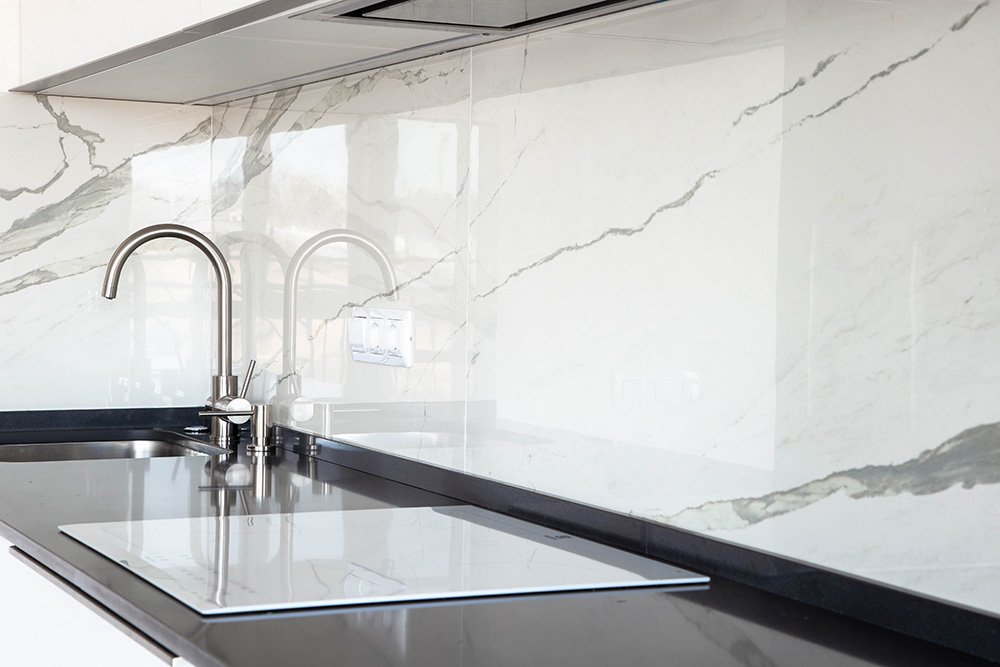
Installation is another advantage. A full-height quartz backsplash eliminates grout lines, which means no scrubbing to remove grease or food splatters. I often recommend pairing it with a quartz countertop for a seamless transition, but it also works well contrasting with butcher block or concrete surfaces. The smooth, glossy finish reflects light, making small kitchens more open and airy.
Cost-wise, quartz falls between premium tiles and natural stone. While pricier than ceramic tile, its longevity and low maintenance justify the investment. Many of my clients find that the timeless appeal of quartz keeps their kitchen looking current for years, avoiding the need for frequent updates.
Design Ideas for Quartz Backsplashes
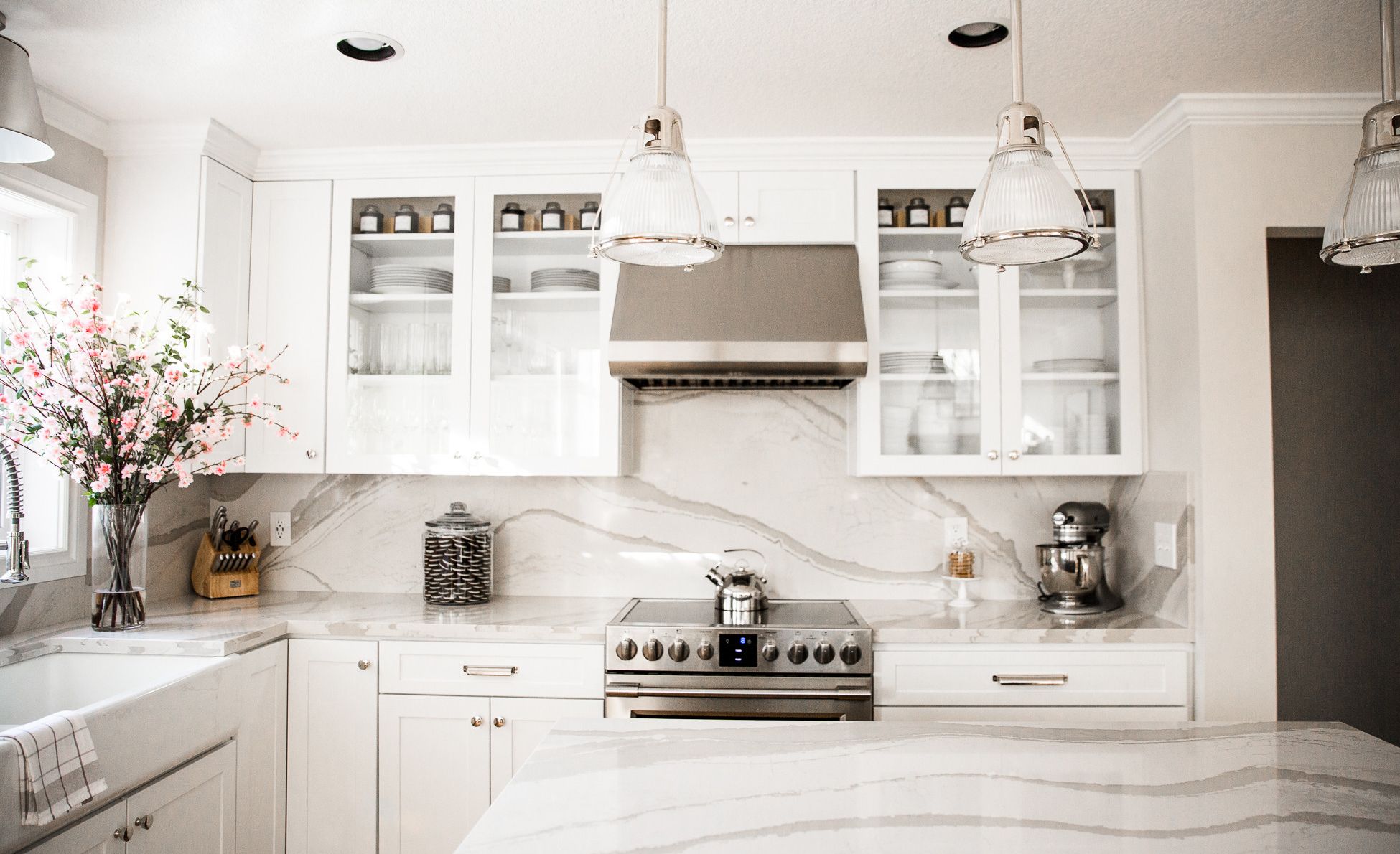
A full-slab quartz backsplash creates a striking, modern look. I prefer extending it to the upper cabinets or even to the ceiling for a dramatic effect. In contemporary kitchens, a waterfall edge where the backsplash curves seamlessly into the countertop adds sophistication. For a more traditional feel, you can pair quartz with decorative tile accents as a border or focal point.
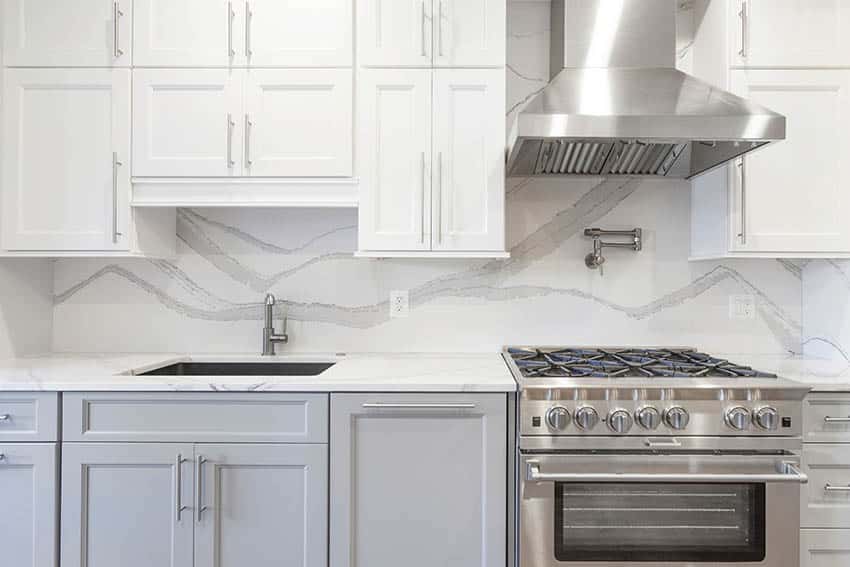
Color selection is key. White or light gray quartz keeps the space bright and timeless, while darker shades like charcoal or navy add depth. If your countertop has bold veining, I recommend a simpler backsplash to avoid visual overload. Some homeowners opt for matching countertop and backsplash quartz, while others choose complementary tones for contrast.
For added personality, consider a herringbone or chevron-patterned quartz tile backsplash. These designs mimic the look of tile but with quartz’s durability. Another trend I love is using quartz with subtle metallic flecks to catch the light, creating a luxurious yet understated effect.
Installation Tips for Quartz Backsplashes
Proper installation ensures your quartz backsplash looks flawless. I always recommend hiring a professional fabricator, as quartz slabs are heavy and require precise cutting. The wall must be perfectly flat—any imperfections will show through the thin material. For a secure hold, use a high-quality adhesive specifically designed for quartz, and ensure adequate support during the curing process.
Seam placement matters. If your backsplash requires multiple pieces, try to position seams in less visible areas, like behind the stove or sink. Some quartz patterns can be book-matched (mirroring the veining) for a more artistic look. I also suggest leaving a small expansion gap at the edges, which is then covered with silicone caulk for a clean finish.
Electrical outlets need special consideration. I typically have them moved slightly lower or higher to avoid awkward cuts in the quartz. If relocation isn’t possible, a skilled installer can make precise cutouts that look intentional. Always test-fit the slab before applying adhesive to confirm alignment with outlets and switches.
Maintaining Your Quartz Backsplash
One of quartz’s biggest advantages is its easy maintenance. Daily cleaning requires just a soft cloth and mild soap—no special cleaners needed. I advise wiping down the backsplash after cooking to prevent grease buildup, though quartz’s non-porous surface resists staining better than tile or natural stone.
Avoid abrasive pads or harsh chemicals like bleach, which can dull the finish over time. While quartz is heat-resistant, I still recommend using trivets for hot pans near the backsplash to prevent thermal shock. For tough stains, a paste of baking soda and water gently lifts residue without scratching.
Unlike natural stone, quartz never needs resealing. However, the silicone caulk at the edges may need refreshing every few years. With minimal care, your quartz backsplash will stay pristine for decades, making it a practical choice for busy kitchens.

Pairing Quartz Backsplashes with Other Materials
Quartz works beautifully with various countertop materials. When paired with quartz countertops, it creates a seamless, luxe look. But I also love combining it with warm wood counters for contrast—the smooth quartz balances rustic textures. In industrial-style kitchens, concrete counters with a sleek quartz backsplash merge raw and refined elements perfectly.
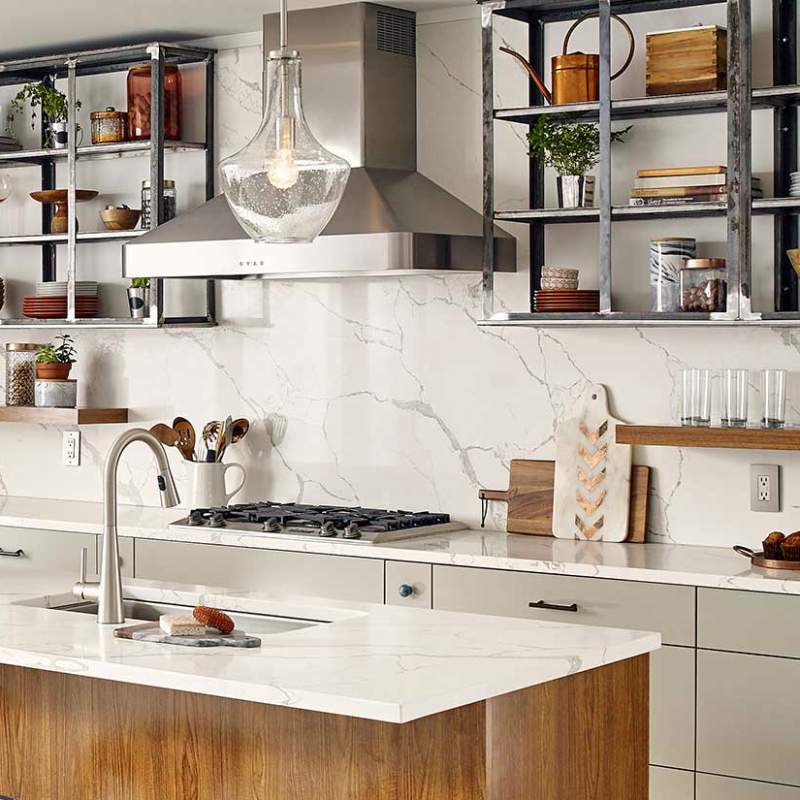
For cabinetry, crisp white quartz backsplashes pop against dark cabinets, while darker quartz adds sophistication to light-colored cabinetry. Open shelving in wood or metal complements quartz nicely, breaking up the solid surface. I often incorporate brass or matte black hardware to tie the look together.
Don’t forget lighting. Under-cabinet LEDs highlight quartz’s veining and reflectivity beautifully. Pendant lights with metallic finishes echo any flecks in the quartz, creating a cohesive design. The key is balancing quartz’s cool elegance with warm textures for a welcoming kitchen vibe.
Cost Considerations for Quartz Backsplashes
Quartz backsplashes range from mid to high-end in price. Standard options start around $60 per square foot installed, while premium veined designs can exceed $100. Full-height installations cost more but eliminate upper wall finishes, which may offset expenses. I suggest getting samples first—some lower-priced quartz looks nearly identical to high-end versions.
Labor costs vary by region, but professional installation is worth it for perfect seams and alignment. Keep in mind that complex cuts for outlets or angled walls add to the price. Compared to high-end tile, quartz often costs similar or less when factoring in labor and grout maintenance savings.
For budget-conscious homeowners, quartz tile offers a similar look at a lower price point. Another option is using quartz only behind the stove or sink as an accent, with paint or simpler tile elsewhere.
Can you install a quartz backsplash yourself?
While DIY installation is possible, I don’t recommend it for full-slab quartz backsplashes. The material is heavy and requires precise cutting for outlets and edges. Thin quartz tiles might be manageable for experienced DIYers, but even then, proper adhesive application and seam alignment are tricky. Professional installers have specialized tools to handle the weight and create seamless looks. Mistakes can be costly with quartz, so investing in expert installation usually pays off.
How does quartz compare to subway tile for backsplashes?
Quartz offers a more contemporary, seamless appearance compared to subway tile’s traditional grid look. Maintenance is easier with quartz since there are no grout lines to clean. While subway tile is generally cheaper upfront, quartz’s durability may make it more cost-effective long-term. Quartz also provides better stain resistance, especially behind cooking areas. That said, subway tile allows more creative patterns and is easier to install yourself.
Is quartz backsplash good behind a stove?
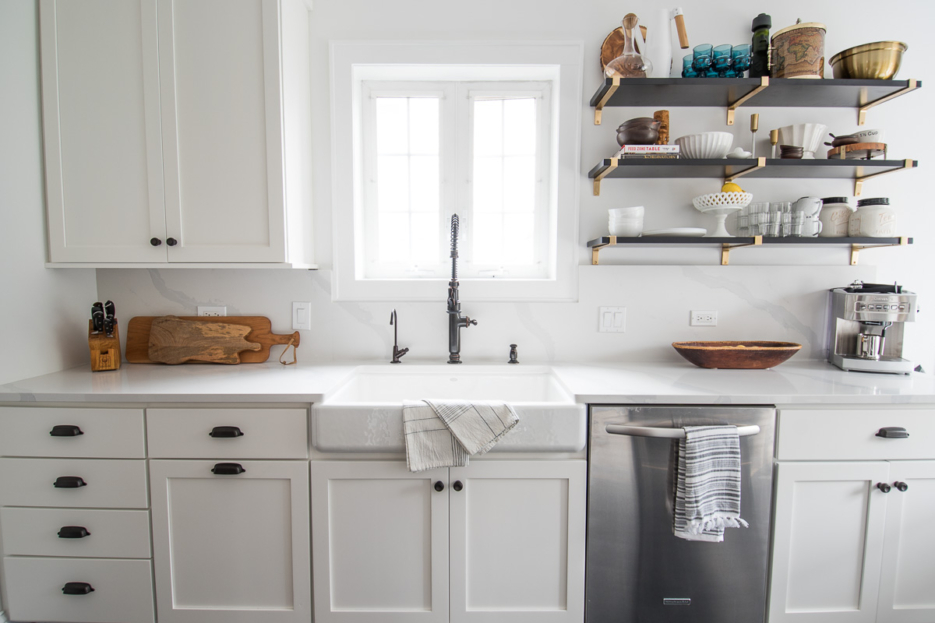
Absolutely—quartz is one of the best materials for behind stoves. Its non-porous surface resists grease splatters and wipes clean easily. Unlike some natural stones, quartz won’t absorb cooking oils or discolor from heat exposure (though direct flame contact should still be avoided). I often recommend a full-height quartz backsplash in cooking areas since it creates a protective barrier for the wall. Just be sure to clean spills promptly to maintain its shine.
Can you put a quartz backsplash over existing tile?
It’s possible but not ideal. The existing tile must be perfectly flat, and the additional thickness may cause issues with outlets and cabinet alignment. I typically recommend removing old tile first to ensure proper adhesion and a flush finish. If removal isn’t feasible, a professional can install cement board over the tile as a new base, but this reduces your kitchen space slightly.

How do you clean quartz backsplashes?
Daily cleaning is simple—just wipe with a soft cloth and mild dish soap. For tougher grease, use a non-abrasive cleaner or baking soda paste. Avoid acidic cleaners like vinegar or lemon juice, as they can dull the surface over time. Unlike natural stone, quartz doesn’t require special sealants. The main caution is avoiding harsh scrub pads that could leave fine scratches. With proper care, your quartz backsplash will stay shiny for years.
Does quartz backsplash need grout?
Full-slab quartz backsplashes don’t use grout at all—that’s one of their main advantages. The slabs are installed with tight seams (if needed) that are nearly invisible. Quartz tile backsplashes do require grout, but with larger-format tiles, you minimize grout lines. If opting for quartz tile, I recommend epoxy grout for better stain resistance in kitchen environments. Either way, you’ll have far less grout maintenance than with traditional tile installations.

Quartz Backsplash Kitchen (Design Guide) – Designing Idea
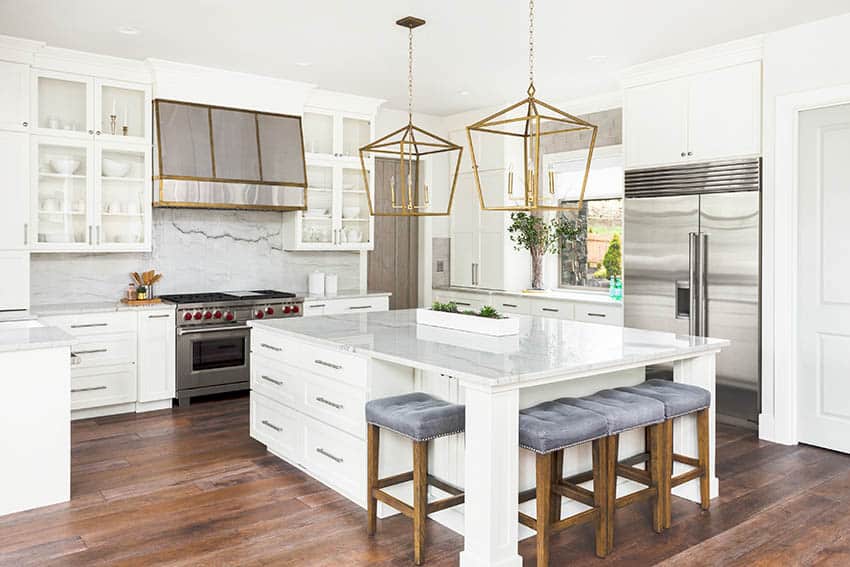
Kitchen Backsplash: Ideas and Designs Caesarstone
Related Posts:
- French Kitchen Backsplash Ideas
- Cottage Kitchen Backsplash
- Country Kitchen Backsplash
- Retro Kitchen Backsplash
- Rustic Wood Kitchen Backsplash
- Vintage Kitchen Backsplash Ideas
- Modern Farmhouse Kitchen Backsplash
- Mid Century Modern Kitchen Backsplash Tile
- Turquoise Kitchen Backsplash Tile
- Mediterranean Tile Kitchen Backsplash