When I started planning my modern farmhouse kitchen renovation two years ago, I knew the countertops would make or break the entire design. I wanted something that felt both contemporary and timeless, durable enough for my busy family life, yet beautiful enough to anchor the space. After months of research, numerous samples, and some costly mistakes, I finally discovered the perfect combination that harmoniously blends the best of modern functionality with farmhouse charm. Let me share what I learned about choosing countertops that truly capture the modern farmhouse aesthetic.
Quartz vs. Natural Stone: My Decision Process
I spent weeks debating between engineered quartz and natural stone for my countertops. Initially, I was drawn to the idea of genuine marble for its classic farmhouse look, but reality set in when I started researching the maintenance requirements. As someone who cooks daily and has two teenagers who treat the kitchen like a 24-hour diner, I needed something more forgiving than natural stone’s porous surface and staining tendencies.
Quartz won me over with its durability and consistent patterns. I chose Caesarstone’s Organic White, which mimics the look of Carrara marble but without the maintenance headaches. The subtle gray veining adds character without being overwhelming, and I love that I can place hot pots directly on the surface without worry. The non-porous nature means I never have to seal it, and wine spills wipe away effortlessly.
The investment was significant, but after living with these countertops for over a year, I can confidently say it was worth every penny. They still look as pristine as on installation day, despite constant use. The consistent quality of engineered quartz means no surprises with color variations or weak spots that sometimes occur with natural stone. For a modern farmhouse kitchen that needs to be both beautiful and practical, quartz delivered exactly what I needed.
Butcher Block Accents: Adding Warmth and Function
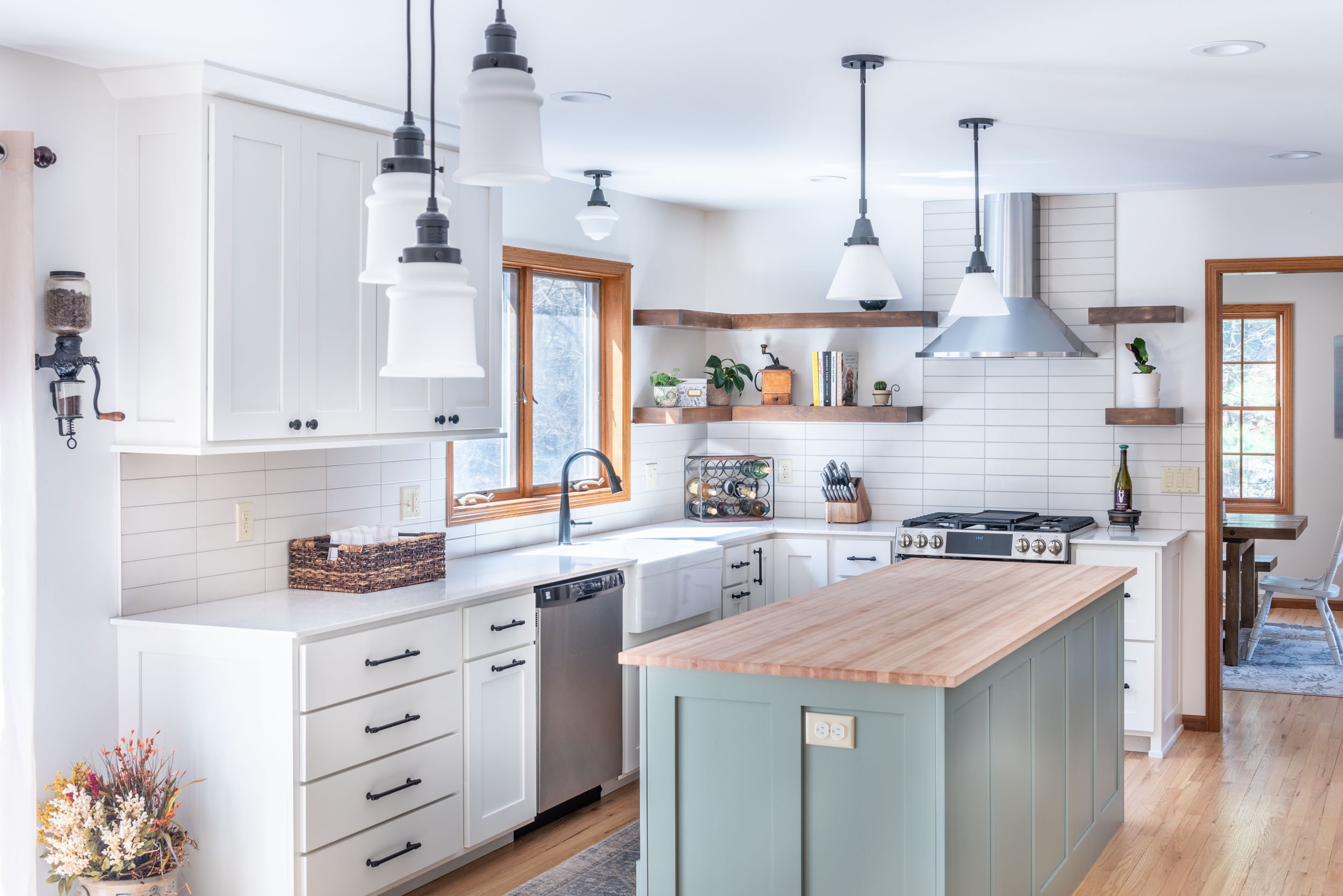
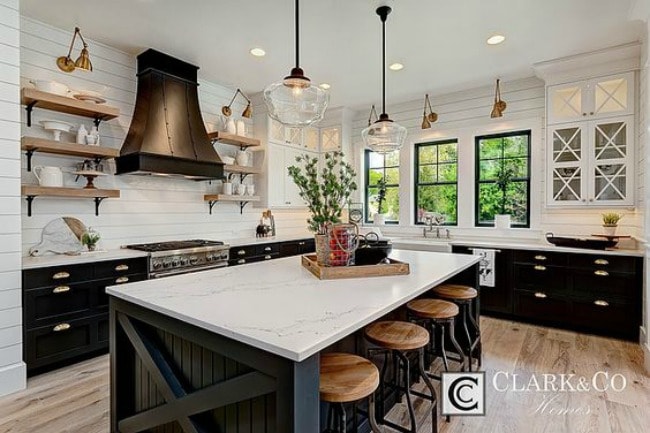
One of my favorite design decisions was incorporating a butcher block island countertop alongside my white quartz perimeter counters. This combination perfectly captures the modern farmhouse aesthetic, mixing sleek contemporary elements with warm, natural materials. The wood adds texture and warmth that prevents the space from feeling too cold or sterile, which can happen with an all-quartz kitchen.
I chose walnut butcher block for its rich color and distinctive grain pattern. The darker wood creates a beautiful contrast against my white cabinets and provides a designated prep area where I can chop vegetables and knead bread without worrying about knife marks on my quartz. The island has become the heart of our kitchen, where family gathers for homework, casual meals, and weekend baking projects.
Maintaining the butcher block requires more attention than quartz, but I’ve found the routine quite manageable. I oil it monthly with food-safe mineral oil and sand out any deep scratches or stains as needed. The patina that develops over time actually adds to its character. I love how this natural aging process makes the island feel like a well-loved piece of furniture rather than just another kitchen surface.
Edge Profiles: Creating Visual Interest and Style
The edge profile you choose can dramatically impact your countertops’ overall appearance and how well they fit your modern farmhouse vision. I initially planned to go with a simple straight edge throughout, thinking it would look clean and contemporary. However, my designer suggested mixing edge profiles to add visual interest and define different areas of the kitchen, and I’m so glad I listened to her advice.
For my perimeter quartz counters, I chose a subtle eased edge that’s slightly rounded. This creates a softer, more organic feel than a sharp, straight edge while still maintaining clean lines. The rounded edge is also safer for my family and easier to clean than more ornate profiles. It strikes the perfect balance between modern simplicity and farmhouse warmth that I was seeking throughout the design.
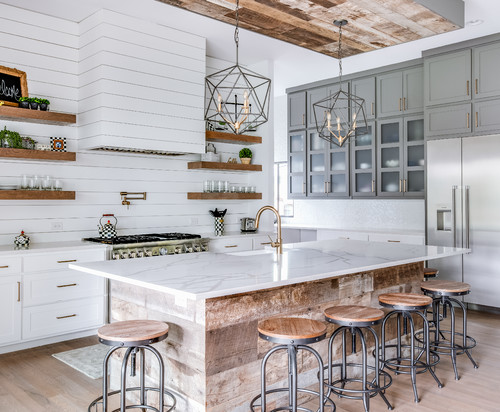
On my walnut island, I opted for a live edge that showcases the natural beauty of the wood grain. This single design element transforms what could be a standard rectangular island into a stunning focal point. The organic edge celebrates the imperfections and natural character of the wood, which feels very authentic to the farmhouse aesthetic. Guests always comment on this detail, and it’s become a conversation starter during dinner parties.

Color Coordination with Cabinets and Backsplash
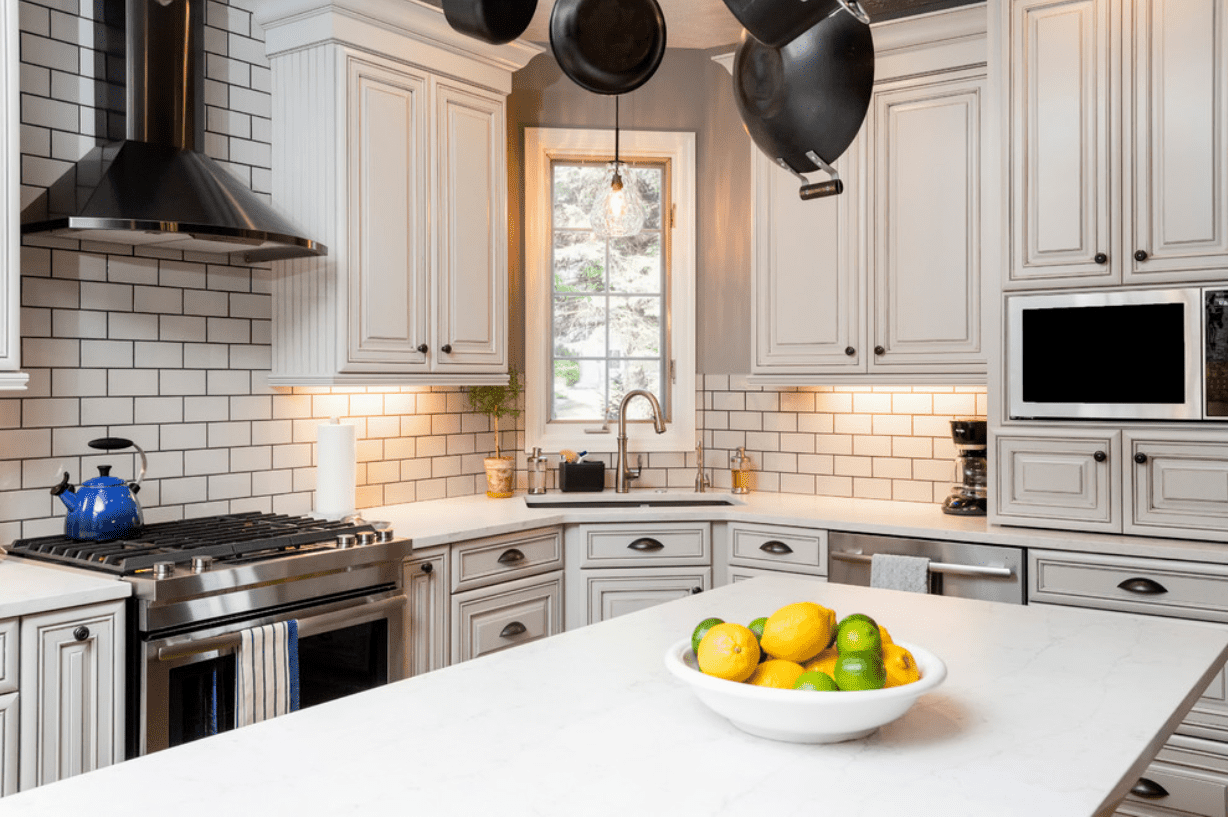
Getting the color balance right between countertops, cabinets, and backsplash took more planning than I initially expected. My white shaker cabinets needed countertops that would complement rather than compete with them. I learned that pure white quartz can actually clash with off-white or cream-colored cabinets, creating an unintentional contrast that looks more accidental than intentional.
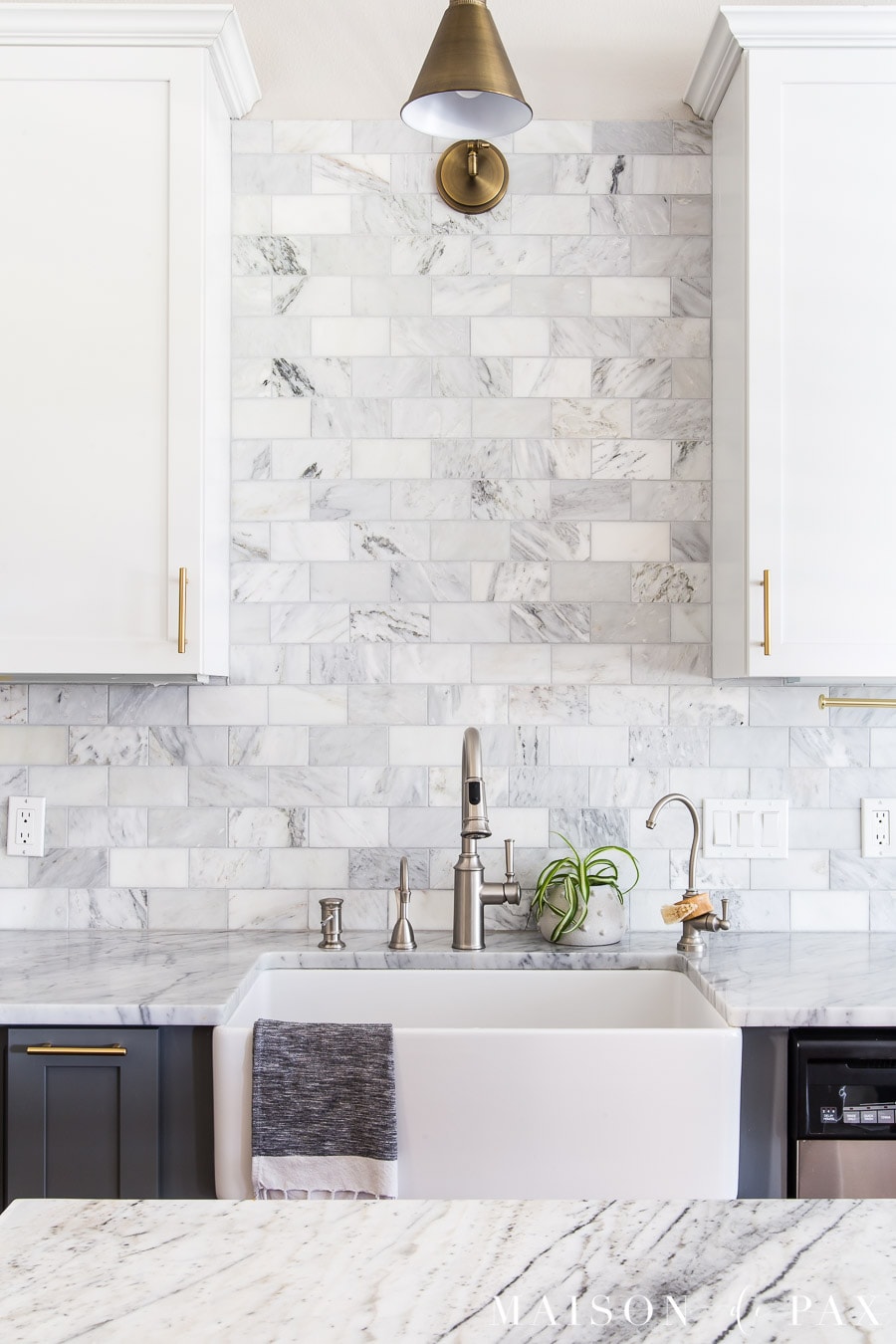
I brought home large samples of different quartz options and lived with them for a week, observing how they looked in different lighting conditions. The Organic White I ultimately chose has just enough warm undertones to harmonize beautifully with my Cloud White cabinets. The subtle gray veining picks up the grout lines in my subway tile backsplash, creating a cohesive color story throughout the space.
The walnut island countertop adds a rich anchor point that grounds the lighter elements in the room. I was initially worried it might look too dark or heavy, but it actually makes the white elements feel more intentional and sophisticated. The wood tones also complement the brass hardware and light fixtures I chose, creating layers of warmth that prevent the space from feeling stark or cold.
Practical Considerations: Durability and Maintenance
Living with these countertops for over a year has taught me the importance of choosing materials that can handle real-life use. My quartz counters have exceeded my expectations for durability. They’ve survived everything from holiday meal prep marathons to science projects gone wrong. The surface resists scratches, stains, and heat damage that would have destroyed natural marble or even granite.
Daily maintenance couldn’t be simpler with quartz. I wipe them down with warm, soapy water or my favorite all-purpose cleaner, and they always look perfect. Unlike natural stone, there’s no special sealing schedule to remember or specific cleaners to buy. This low-maintenance aspect was crucial for me because I wanted beautiful countertops without adding complicated care routines to my already busy schedule.
The butcher block requires more attention, but I’ve found it manageable and even enjoyable. I think of oiling the wood as a meditative monthly ritual that connects me to the natural material. When scratches appear, I can sand them out easily, which is actually quite satisfying. The ability to refresh and restore the surface means this countertop can last for decades with proper care, making it a sustainable choice.

Budget-Friendly Alternatives That Don’t Compromise Style
Not everyone can invest in premium quartz and solid wood countertops, but there are ways to achieve the modern farmhouse look on a tighter budget. When I was initially pricing options, I explored several alternatives that could deliver similar aesthetic results. Laminate technology has come so far that some options convincingly mimic natural stone and wood at a fraction of the cost.
For those wanting the look of butcher block without the maintenance, I discovered bamboo countertops that offer similar warmth and natural beauty. Bamboo is naturally antimicrobial and more water-resistant than traditional wood, making it easier to maintain. It’s also a rapidly renewable resource, which appeals to environmentally conscious homeowners. The light color works beautifully in modern farmhouse kitchens and costs significantly less than hardwood.
Concrete countertops are another budget-friendly option I seriously considered. They can be customized with various colors and textures to achieve a modern farmhouse look, and the DIY potential makes them very affordable. While they require sealing and can develop hairline cracks over time, they offer unique character and can be tinted to complement any color scheme. For creative homeowners willing to embrace imperfections, concrete can be a stunning choice.
How do I choose between quartz and granite for my modern farmhouse kitchen countertops?
I chose quartz over granite because it’s non-porous, requires no sealing, and offers consistent patterns. Granite needs regular sealing and can have natural flaws. For modern farmhouse style, both work well, but quartz with subtle veining gives you the stone look with less maintenance. Consider your lifestyle and how much upkeep you’re willing to handle.
Is butcher block practical for kitchen countertops, or is it just for looks?
Butcher block is definitely practical! I use mine daily for food prep, and it’s naturally antibacterial. It does require monthly oiling and occasional sanding for deep scratches, but I find the maintenance routine relaxing. The key is choosing the right wood, proper sealing around sinks, and accepting that some patina adds character rather than detracts from beauty.

What’s the best edge profile for modern farmhouse countertops that balances style and function?
I recommend eased or slightly rounded edges for the perfect balance. They’re safer than sharp edges, easier to clean than ornate profiles, yet softer than straight edges. Avoid overly decorative edges that feel too traditional, or you’ll lose the modern aspect. Live edges work beautifully on wood countertops for added farmhouse character.
How much should I budget for modern farmhouse kitchen countertops?
Budget varies widely based on materials and size. I spent about $4,000 for quartz perimeter counters and $800 for a walnut butcher block island in my 150-square-foot kitchen. Laminate alternatives start around $1,200 total, while premium natural stone can exceed $8,000. Include installation costs, which typically add 30-50% to material prices.

Can I mix different countertop materials in one kitchen without it looking chaotic?
Absolutely! I mixed white quartz and walnut butcher block beautifully. The key is choosing materials that complement rather than compete. Stick to a cohesive color palette and use different materials to define specific areas, like a wood island with a stone perimeter. Limit yourself to two main materials to maintain visual harmony.
What maintenance routine keeps modern farmhouse countertops looking their best?
Daily cleaning with warm, soapy water works for most surfaces. My quartz needs nothing more, while the butcher block gets monthly mineral oil treatments. I wipe spills immediately, use cutting boards for heavy prep work, and deep clean weekly. The key is developing consistent habits rather than letting maintenance tasks pile up, which makes everything more manageable.

Quartz Counter Tops Kitchen Update – Our Faux Farmhouse

What’s Your Style? A Close Look at Modern Farmhouse Kitchens
Save vs Splurge Kitchen Ideas (Modern Farmhouse Kitchen) – Maison
Modern Farmhouse Kitchens for Gorgeous Fixer Upper Style
Quartz Countertops for a Modern Farmhouse
Related Posts: