When I started planning my kitchen renovation two years ago, I knew I wanted something unique that would stand the test of time. After months of research and visiting countless showrooms, I fell in love with terrazzo countertops. The combination of sustainability, durability, and stunning visual appeal made it an easy choice. Now, after living with terrazzo counters for over a year, I can honestly say it was one of the best decisions I made during my renovation.
Why I Chose Terrazzo Over Other Materials
The moment I saw my first terrazzo sample, I was captivated by its depth and character. Unlike solid surfaces that can feel flat and monotonous, terrazzo tells a story with every speckle of marble, glass, or stone embedded in its surface. I loved knowing that each slab would be unique to my kitchen. The history behind terrazzo also appealed to me; this ancient technique of mixing aggregate materials with cement or resin has been refined over centuries.
Cost played a significant role in my decision-making process. While terrazzo isn’t the cheapest option available, I found it competitively priced compared to high-end granite or quartz. When I factored in its longevity and the fact that it can be refinished rather than replaced, the value proposition became even more attractive. I was looking at roughly $60-90 per square foot installed, which felt reasonable for a material that could last decades.
The environmental benefits sealed the deal for me. Many terrazzo manufacturers use recycled glass and stone chips, which align perfectly with my goal of creating a more sustainable kitchen. I appreciated that terrazzo doesn’t require mining like natural stone, and the production process has a smaller carbon footprint than many alternatives. Knowing my countertops were helping reduce waste made me feel good about my choice every time I cooked.
My Experience with Different Terrazzo Compositions
During my research phase, I discovered that not all terrazzo is created equal. I spent weeks learning about the different binding agents and aggregate options available. Traditional cement-based terrazzo offered incredible durability and a classic look that appealed to my love of vintage aesthetics. However, I ultimately chose epoxy-based terrazzo for my kitchen because of its superior stain resistance and lighter weight, which worked better with my existing cabinet structure.
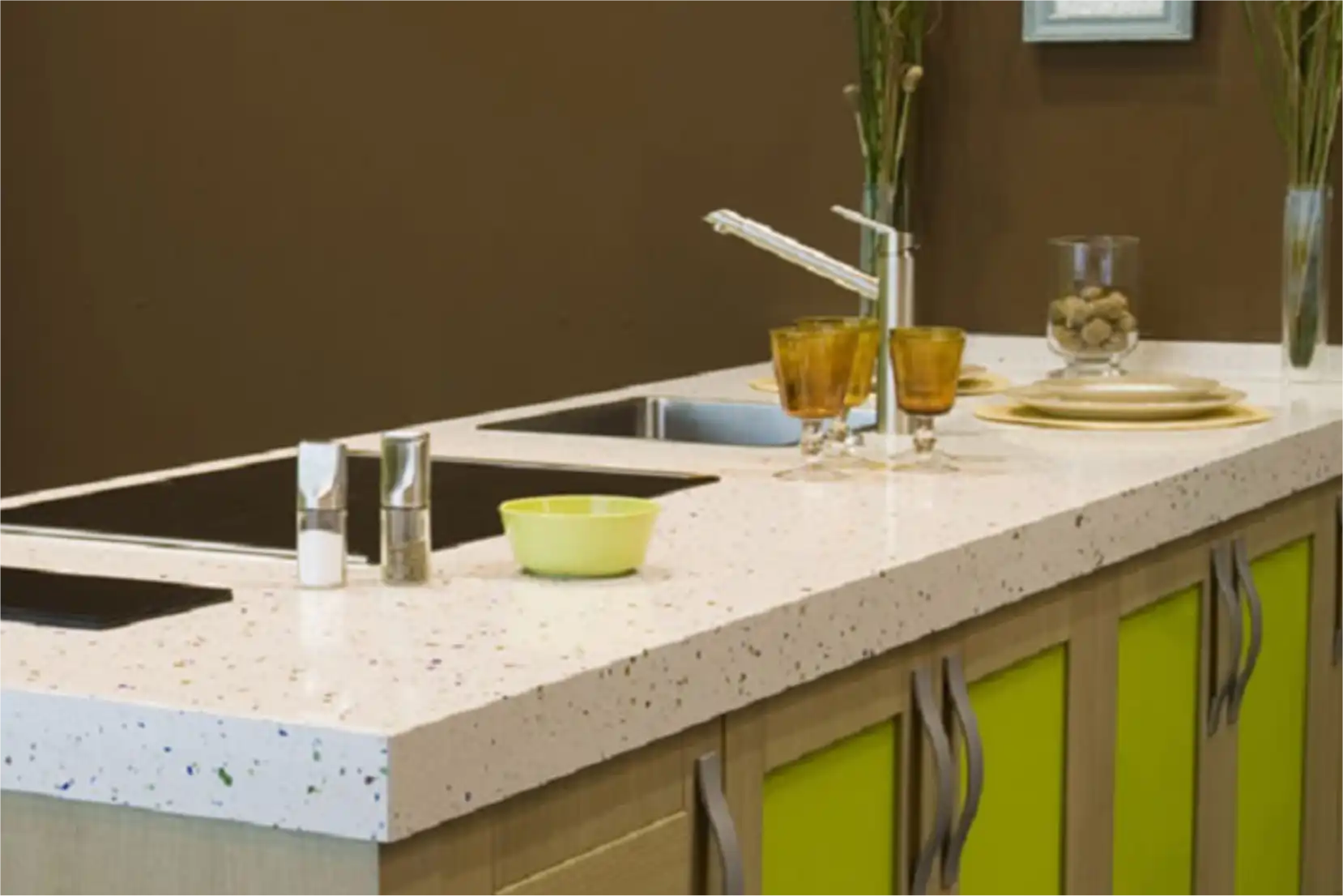
The aggregate selection process was like choosing jewelry. I visited several suppliers and spent hours examining different combinations of marble chips, recycled glass, and even metal fragments. I ended up selecting a mix with white and gray marble chips accented by subtle pieces of recycled blue glass. The result was a surface that complemented both my white cabinets and the natural light flowing through my kitchen windows.
Working with my fabricator, I learned that the ratio of aggregate to binder dramatically affects both appearance and performance. We opted for a higher aggregate content, which created more visual interest but required careful sealing. The fabricator explained that this choice would give me the authentic terrazzo look I wanted while maintaining the practical benefits I needed for daily cooking and entertaining.

Installation Process and What to Expect
I’ll be honest, the installation process tested my patience. Unlike drop-in countertop materials, terrazzo requires careful planning and precise execution. My contractor explained that we needed to reinforce the cabinet structure to support the weight, which added both time and cost to the project. The entire process from template to final polish took about three weeks, much longer than I initially anticipated.
The grinding and polishing phase was particularly intensive. I had to vacate my kitchen for several days while the crew used specialized equipment to achieve the smooth, lustrous finish I wanted. The dust and noise were significant, but watching the surface transform from rough and matte to glossy and refined was absolutely fascinating. I recommend planning this work when you can stay elsewhere or have alternative cooking arrangements.
What surprised me most was the curing time required before I could use my countertops normally. Even after installation was complete, I had to wait another week before placing heavy items or using acidic ingredients directly on the surface. This patience paid off though, as proper curing ensured my countertops would maintain their beauty and integrity for years to come.
Daily Maintenance and Care Routine
Living with terrazzo countertops has been surprisingly low-maintenance. My daily routine involves simply wiping down the surface with warm water and a mild dish soap after meal preparation. I avoid acidic cleaners like vinegar or lemon-based products, which can etch the surface over time. Instead, I use pH-neutral stone cleaners that keep the surface looking pristine without causing any damage.
Sealing has become an annual ritual that I actually enjoy. Every spring, I apply a penetrating sealer that protects against stains and water damage. The process takes about an hour and costs less than $50 for materials. I’ve found that this small investment of time and money keeps my countertops looking as good as the day they were installed, even with heavy daily use.
Spill management was something I worried about initially, but it’s proven to be manageable with proper habits. I clean up wine, coffee, and cooking oils immediately to prevent any potential staining. For stubborn spots, I use a paste made from baking soda and water, which gently lifts stains without scratching the surface. After over a year of cooking, entertaining, and general kitchen chaos, my countertops still look remarkable.

Long-Term Performance and Durability
After eighteen months of daily use, I can confidently say that terrazzo lives up to its reputation for durability. My countertops show virtually no signs of wear despite hosting countless dinner parties, holiday cooking marathons, and the occasional mishap with sharp knives. The surface has maintained its original luster with just routine care and annual sealing.
One aspect I particularly appreciate is how gracefully terrazzo ages. Small scratches or minor chips that might ruin other materials add character to terrazzo, blending seamlessly with the aggregate pattern. I’ve had a few minor incidents, including dropping a heavy pot and accidentally cutting directly on the surface, but these left minimal marks that aren’t noticeable unless you know exactly where to look.
The heat resistance has been exceptional for my cooking style. I regularly place hot pots and pans directly on the surface without any damage or discoloration. This convenience has made cooking more enjoyable, as I don’t need to constantly search for trivets or worry about heat marks. The thermal properties of terrazzo help regulate kitchen temperature, keeping the surface cool even during intensive cooking sessions.
Design Flexibility and Customization Options
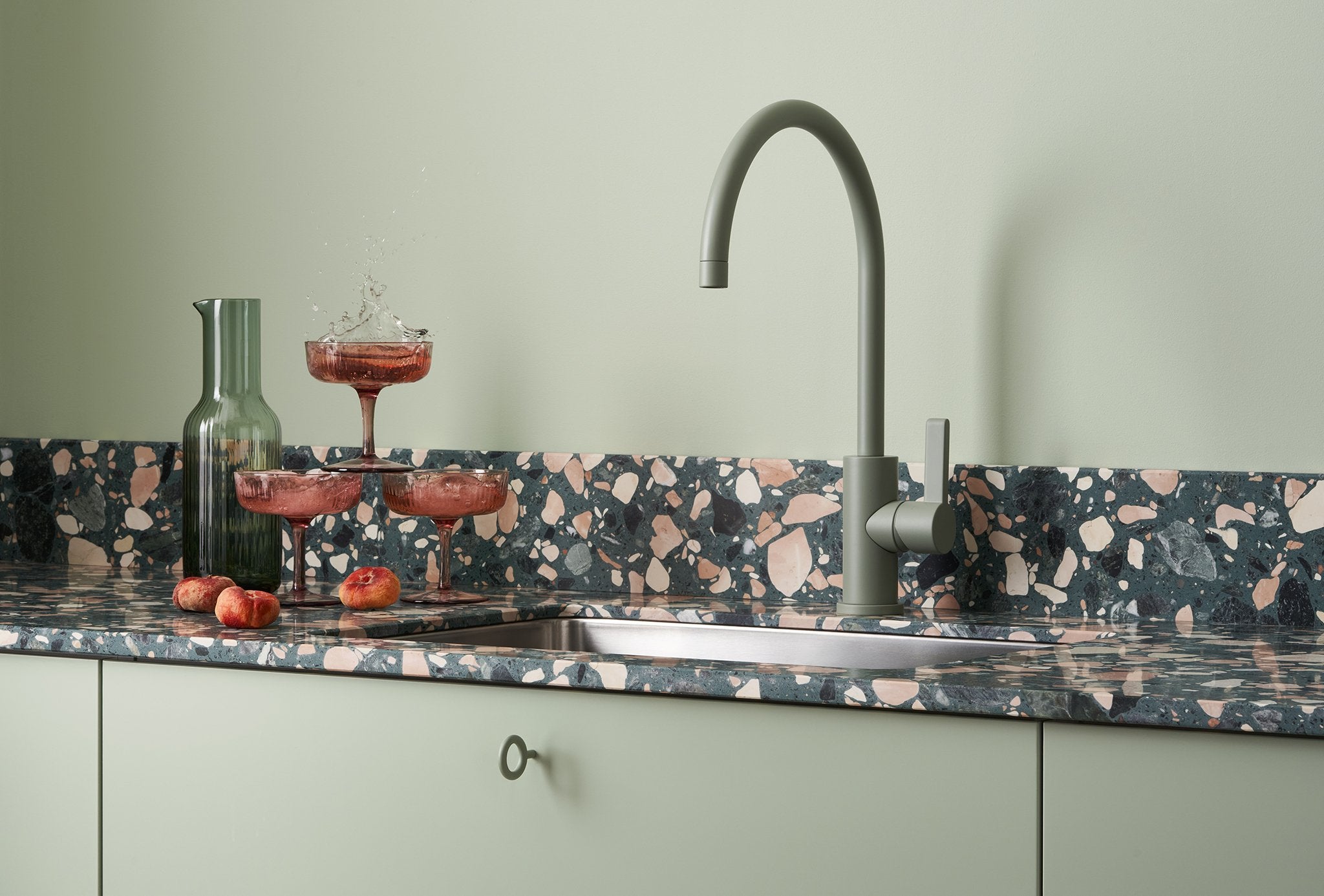
The creative possibilities with terrazzo initially overwhelmed me, but working with my designer helped narrow down the options. We experimented with different aggregate sizes and colors, ultimately creating a custom blend that perfectly complemented my kitchen’s aesthetic. The ability to incorporate meaningful elements, like glass from my grandmother’s broken china, made the countertops feel truly personal and special.
Edge profiles offered another opportunity for customization. I chose a simple beveled edge that highlighted the material’s depth while maintaining clean lines that matched my modern farmhouse style. Some of my friends opted for more elaborate edge treatments like waterfall designs or integrated backsplashes, which created stunning focal points in their kitchens.
Color coordination was easier than I expected. The neutral base of my terrazzo allowed me to change wall colors, cabinet hardware, and decorative accessories without worrying about clashing. The subtle variations in the aggregate create a dynamic surface that looks different throughout the day as lighting changes. This adaptability has been invaluable as my design preferences have evolved.

How does terrazzo hold up to daily cooking and food prep?
I’ve been incredibly impressed with how well my terrazzo countertops handle daily kitchen activities. They resist scratches better than marble and don’t show knife marks like softer materials. Hot pans don’t damage the surface, and spills wipe up easily with proper sealing. After 18 months of heavy use, they still look fantastic.
Is terrazzo difficult to maintain compared to other countertop materials?
Actually, I find terrazzo easier to maintain than my previous granite counters. Daily cleaning requires just soap and water, and annual sealing takes about an hour. Unlike natural stone, terrazzo doesn’t need special cleaners or constant worry about acidic foods. The maintenance routine is simple and fits easily into my schedule.

How much did your terrazzo installation cost compared to other premium options?
My terrazzo came in around $75 per square foot installed, which was comparable to high-end quartz and less than exotic granite. While the initial investment was significant, the longevity and refinishing capability make it cost-effective long-term. I consider it excellent value for a material that could last several decades.
Can terrazzo be repaired if it gets damaged?
Yes, and this was a major selling point for me. Small chips can be filled and polished to blend seamlessly, and the entire surface can be professionally refinished if needed. This repairability means my countertops can look new again rather than requiring complete replacement, which saves money and reduces waste.

How do you choose the right aggregate mix for your kitchen design?
I recommend visiting multiple suppliers to see samples in different lighting conditions. Consider your cabinet color, backsplash, and overall style when selecting aggregates. I chose neutral marble chips with subtle glass accents that complement various design elements. Don’t rush this decision; it’s what makes your countertops unique.
Does terrazzo work well in busy family kitchens with kids and pets?
Absolutely! The durability has been perfect for my active household. My kids’ art projects, pet water bowls, and general chaos haven’t damaged the surface. The textured appearance helps hide minor imperfections better than solid surfaces. It’s proven to be both beautiful and practical for real family life.

Terrazzo on the Rise – Kitchen and Bath Digest
Trend Alert: What Is Terrazzo and How to Use It in Your Home
Move Over, Marble! 6 Countertop Materials to Consider for Your

Related Posts: