When I bought my 1890s Victorian home, the kitchen floor was covered in tired linoleum that hid what I suspected were original floorboards underneath. Restoring authentic Victorian flooring became my passion project.
I spent months researching period-appropriate options, visiting salvage yards, and learning about materials that would honor the home’s history while standing up to modern kitchen demands. The journey taught me that Victorian kitchen flooring isn’t just about aesthetics, it’s about finding that sweet spot between historical accuracy and practical functionality that makes these spaces livable today.
Understanding Authentic Victorian Flooring Materials
Encaustic tiles were the crown jewel of Victorian kitchen flooring, and I fell completely in love with their intricate geometric patterns. These durable cement tiles have colored pigments mixed throughout rather than just on the surface, which means the patterns won’t wear away even after decades of foot traffic. I found salvaged Victorian encaustic tiles at an architectural reclamation yard, and while they were pricey at $12 per tile, the authentic patina and craftsmanship were worth every penny for the high-traffic area near my stove.
Quarry tiles offered a more affordable, authentic option that I used in my larger kitchen space. These unglazed clay tiles came in deep reds, browns, and earth tones that Victorians favored for their practicality and warmth. I chose 6×6 inch squares in a rich terracotta shade that hides dirt beautifully while maintaining period authenticity.
The matte finish provides excellent slip resistance when wet, which modern glossy tiles often lack. Installing them required finding someone experienced with traditional materials since the thickness varies slightly from tile to tile.
Wood flooring was standard in Victorian kitchens, though often covered with other materials in work areas. I discovered heart pine floors beneath my linoleum, boards that were 8 inches wide with incredible grain patterns you don’t see in modern lumber.
Restoring them required sanding, filling gaps with custom-mixed wood putty, and applying multiple coats of traditional tung oil finish. The wood adds warmth that tile can’t match, though I did place washable rugs in splash zones since wood requires more maintenance near sinks and dishwashers than tile does.

Recreating Victorian Patterns With Modern Materials
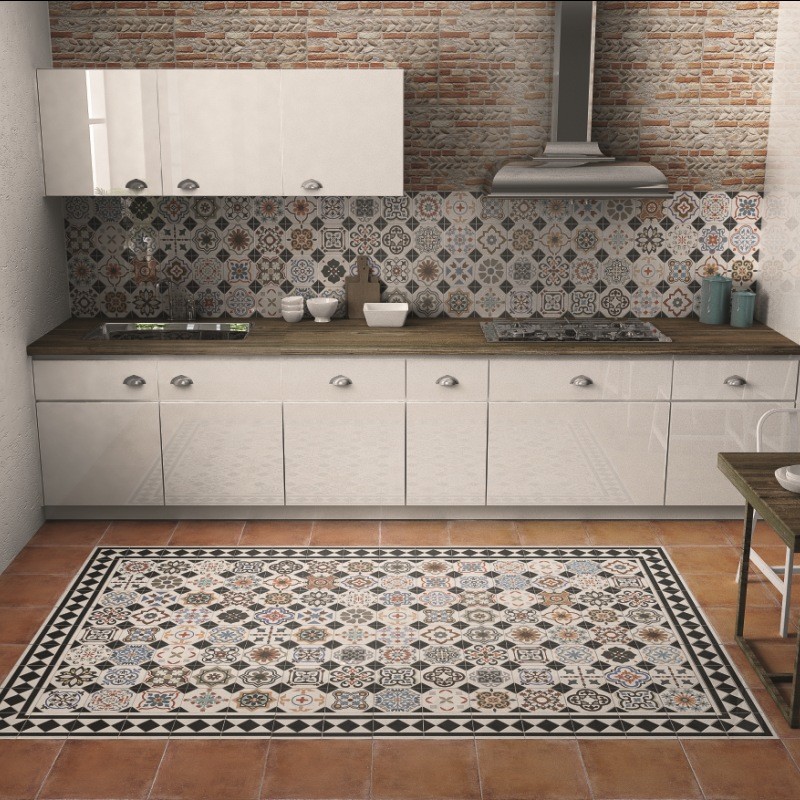
Porcelain tiles that replicate Victorian encaustic patterns became my solution for areas needing modern durability. I found a manufacturer producing stunning reproductions of classic Victorian geometric designs in porcelain that’s virtually indestructible and completely waterproof. These cost about $8 per square foot versus $12-15 for authentic cement tiles, and they’re significantly easier to install and maintain. The colors aren’t quite as rich as the originals, but standing back even a few feet, the difference becomes imperceptible.
Luxury vinyl tile surprised me with how convincingly it can mimic Victorian patterns and materials. I initially dismissed vinyl as too modern, but technology has advanced dramatically. I used patterned vinyl that looks exactly like encaustic tile in my pantry area, and guests consistently think it’s real cement tile until I tell them otherwise. The cost was incredibly reasonable at $3 per square foot, installation was DIY-friendly, and it’s wonderfully comfortable underfoot, which matters during long cooking sessions.
Mixing authentic and reproduction materials let me stretch my budget while maintaining visual impact. I splurged on genuine Victorian tiles for my kitchen’s focal point, a 4×6-foot area in the center with an elaborate floral pattern surrounded by geometric borders. Then I used high-quality porcelain reproductions for the remaining floor space in coordinating colors and simpler patterns. This approach gave me the authentic centerpiece I wanted while keeping the project financially manageable, and the blended result looks completely cohesive.

Choosing the Right Color Schemes and Combinations
Deep reds and terracotta tones dominated Victorian kitchens, and I understood why once I lived with these colors. They hide the inevitable stains and dirt that kitchen floors accumulate while creating a warm, welcoming atmosphere that lighter colors can’t achieve. I chose tiles in burgundy, rust, and cream that form a complex geometric pattern, and two years later, the floor still looks clean even though it gets heavy daily use from my family and our two dogs, who track in everything imaginable.
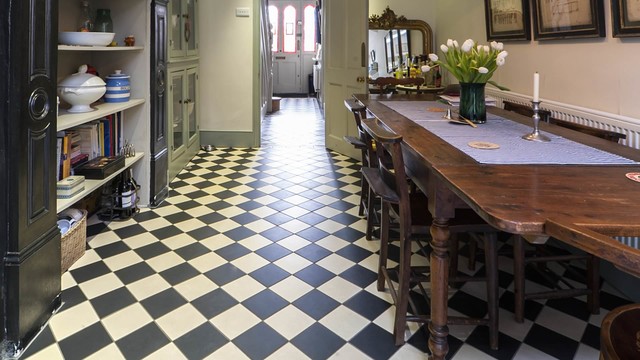
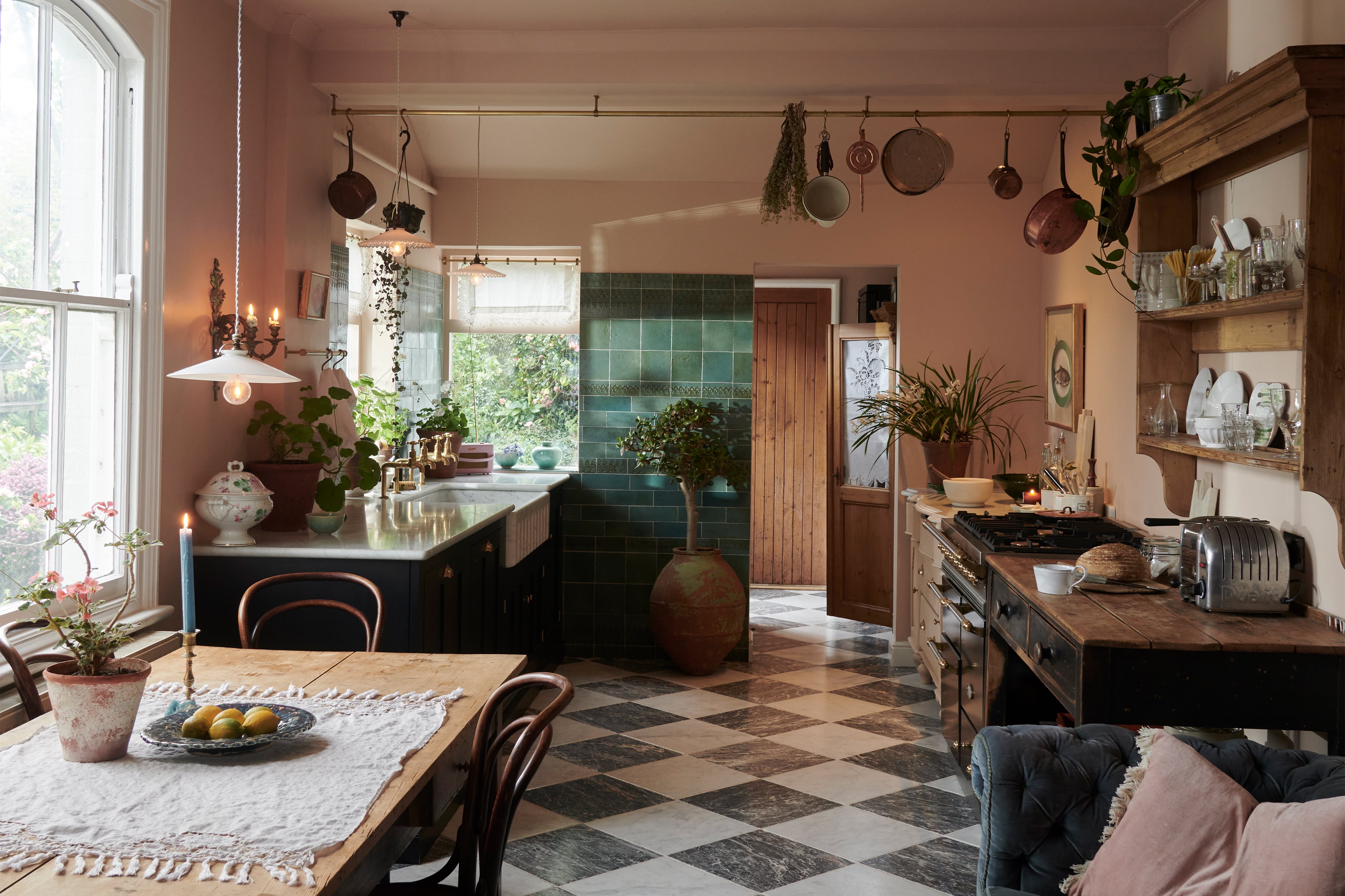
Black and white checkerboard patterns represent another classic Victorian choice that I almost selected. This timeless combination works beautifully in Victorian kitchens, creating drama and visual interest that never feels dated. My neighbor installed 12×12-inch black and white tiles in her Victorian kitchen, and the bold pattern makes the space feel larger and more formal. However, I worried about the white tiles showing every speck of dirt, which steered me toward the more forgiving colored patterns instead.
Subtle earth tone combinations offer a softer Victorian aesthetic that suits smaller kitchens. I used sage green, cream, and soft brown tiles in a repeating pattern that feels calm and organic rather than busy. Victorian homes often featured these quieter palettes in service areas, and I appreciate how they create visual interest without overwhelming my modest kitchen size. The muted colors also bridge beautifully between my Victorian dining room with its bold wallpaper and my more contemporary family room, helping the spaces flow together naturally.

Installation Methods for Period Flooring
Traditional installation using mortar beds is how Victorian tiles were originally laid, and I chose this method for authenticity. The process involves spreading a thick layer of mortar, setting each tile individually, and allowing proper curing time. My installer, who specializes in historic restoration, explained that this method lets tiles settle naturally and creates a slightly irregular surface that looks genuinely old rather than perfectly flat and modern. The installation took twice as long as modern thin-set methods, but the result has an authentic feel that modern techniques can’t replicate.
Modern thin-set adhesive offers a faster, more affordable installation that works perfectly for reproduction tiles. When I installed my porcelain Victorian-pattern tiles in the pantry, I used standard thin-set mortar and followed contemporary tiling techniques. The process was much simpler and more DIY-friendly than traditional methods, and the tiles are just as secure. For budget-conscious renovations or areas where perfect period authenticity isn’t critical, modern installation methods deliver excellent results without compromising the visual effect.
Proper substrate preparation matters more than I realized before starting this project. Victorian homes often have uneven floors that have settled over 130 years, and simply laying new tiles over old surfaces creates problems. I invested in having my floor professionally leveled with self-leveling compound before any tile installation began. This added $800 to my budget but prevented future cracking and ensured proper drainage away from my sink area. Skipping this step to save money would have been a costly mistake I’d regret every time a tile cracked or water pooled.

Maintaining and Protecting Victorian-Style Floors
Sealing became my priority after installation, especially for porous materials like cement encaustic tiles and quarry tiles. I applied two coats of penetrating sealer designed specifically for cement tiles, following the manufacturer’s instructions precisely. This protection prevents staining from spills and makes routine cleaning much easier. I reapply sealer annually, which takes about an hour and keeps my tiles looking fresh. Skipping this maintenance would allow oils and liquids to penetrate the tiles permanently, creating stains that can’t be removed.
Daily cleaning requires gentler approaches than modern floors need. I sweep or vacuum daily to remove grit that can scratch tile surfaces, then damp mop weekly with just warm water and a pH-neutral cleaner made for natural stone and cement tiles. I learned the hard way not to use vinegar or acidic cleaners after they dulled the finish on a test area. Victorian tiles are more delicate than modern porcelain, requiring thoughtful care rather than harsh chemicals, but the maintenance routine is simple once you understand what works.
Strategic placement of rugs protects high-traffic areas while adding period-appropriate style. I placed a vintage-style runner in front of my sink, where water splashes frequently, and washable rugs near the stove where cooking spills happen. These aren’t just practical, they’re historically accurate since Victorians used rag rugs extensively in kitchens. I wash the rugs weekly and rotate them periodically so wear patterns stay even. The rugs also add cushioning that makes standing during meal prep more comfortable on hard tile surfaces.

Balancing Authenticity With Modern Kitchen Needs
Radiant floor heating transformed my Victorian kitchen from beautiful but chilly to genuinely comfortable. Victorian kitchens were notoriously cold, but I wasn’t willing to sacrifice modern comfort for period accuracy. I installed electric radiant heating mats under my tile floor, and the warmth makes the kitchen inviting even during harsh winters. The system cost about $1,200 for my 200-square-foot kitchen, but stepping onto warm tiles on cold mornings is a luxury I cherish. The heating doesn’t affect the floor’s appearance at all.
Waterproofing the subfloor was non-negotiable despite not being period-accurate. Victorian builders didn’t have modern waterproofing membranes, but I wasn’t about to risk water damage to my home’s structure. I installed a waterproof membrane under all my tile work, particularly around the sink, dishwasher, and refrigerator areas where leaks commonly occur. This modern intervention stays completely hidden while protecting my investment and my home’s historical woodwork from potential water damage that could cost thousands to repair.
Mixing old and new materials strategically lets you honor history while embracing practicality. I used authentic Victorian tiles in areas away from major water sources and impact zones, then switched to durable porcelain reproductions directly in front of my sink and stove, where I drop pots and splash water constantly. This practical approach protects my expensive antique tiles from damage while maintaining visual continuity across the entire floor. Nobody notices the subtle material switch, but my authentic tiles will last another century because they’re not subjected to the hardest wear.

How much does Victorian kitchen flooring typically cost?
Costs vary dramatically based on materials. Authentic Victorian encaustic tiles run $12-20 per square foot plus installation, totaling $20-30 per square foot for the complete job. Porcelain reproductions cost $8-12 per square foot installed, while luxury vinyl alternatives run $3-6 per square foot. My 200-square-foot kitchen with mixed authentic and reproduction tiles cost about $3,500 total. Budget at least $15-25 per square foot for quality results that honor Victorian aesthetics.
Are Victorian tile floors durable enough for busy modern kitchens?
Absolutely, when properly sealed and maintained. My encaustic and quarry tiles have survived two years of heavy use with four family members and two dogs without showing significant wear. Victorian-era materials were built to last, often outliving modern alternatives. The key is applying proper sealers and following maintenance protocols. Porcelain reproductions are even more durable than originals. These floors can easily last 50-100 years with appropriate care, making them excellent long-term investments.
Can I install Victorian flooring myself or do I need professionals?
It depends on the material and your skill level. I successfully installed luxury vinyl Victorian patterns myself using basic tools and online tutorials. Porcelain tiles are moderately DIY-friendly if you have tiling experience. However, I hired professionals for authentic encaustic tiles because they require specialized knowledge about mortar consistency, setting patterns, and handling fragile antique materials. Improper installation can crack expensive tiles or create uneven surfaces. For valuable, authentic materials, professional installation is worth the investment.
How do I clean Victorian-style kitchen floors properly?
I sweep or vacuum daily to remove grit, then damp mop weekly with warm water and pH-neutral cleaner designed for natural stone or cement tiles. Never use vinegar, bleach, ammonia, or acidic cleaners as they damage tile surfaces and sealers. For stubborn spots, I use a soft brush with mild soap. Dry the floor after mopping to prevent water spots. Reapply penetrating sealer annually to maintain protection. This gentle routine keeps my floors beautiful without damaging delicate period materials.

Where can I find authentic Victorian tiles?
I sourced mine from architectural salvage yards that specialize in period materials. Search online for “architectural salvage” or “reclamation yards” in your area. Websites like eBay and Etsy sometimes have antique tiles, though shipping fragile materials is risky. Estate sales and demolition auctions occasionally offer Victorian tiles. For reproductions, companies like Fireclay Tile and Original Style manufacture excellent Victorian-pattern tiles. Expect to spend time hunting for authentic pieces; availability varies greatly by region.
Do Victorian floors work with modern appliances and cabinets?
Surprisingly well, creating a beautiful contrast that I love in my kitchen. My stainless steel appliances and white shaker cabinets look stunning against the patterned Victorian floor, creating a bridge between historical architecture and contemporary functionality. The key is choosing floor patterns and colors that complement rather than clash with your modern elements. Neutral-toned cabinets and simple appliances let ornate Victorian floors shine as focal points. This mixing of eras creates kitchens with character and uniqueness that all-modern designs lack.

Victorian Ceramic Kitchen Floor Tiles Victorian Tiling

Stone Kitchen Floor
Victorian Kitchen Floor Tiles

Regent Victorian Kitchen Tiles
Related Posts: