When I first spotted the 1940s cast-iron farmhouse sink buried under decades of grime at a demolition salvage yard, I knew I’d found something special. The dealer wanted $200 for what looked like a rusty disaster, but I could see the potential underneath all that neglect. That impulse purchase three years ago launched me into the fascinating journey of vintage sink restoration and led to completely transforming my kitchen around this incredible centerpiece. Now, every time I wash dishes in my beautifully restored sink, I’m reminded that sometimes the best treasures are hiding in the most unlikely places.
Finding Authentic Vintage Sinks Worth Restoring
Architectural salvage yards became my weekend treasure hunting grounds after that first successful find. I learned to look past surface rust and stains to evaluate the underlying structure and quality of vintage pieces. The key indicators I now search for include thick cast iron construction, intact drain assemblies, and original apron fronts without major chips or cracks. My best discoveries often came from patient digging through outdoor storage areas where the real gems were hidden beneath newer, less interesting fixtures.
Estate sales in older neighborhoods provided another goldmine for authentic vintage kitchen sinks. I developed a system of calling ahead to ask about kitchen fixtures before making the drive, since many sales don’t prominently feature these heavy pieces in their listings. One memorable find was a pristine 1930s double-basin sink with original faucets still in the basement of a Victorian home. The family had upgraded to modern fixtures but couldn’t bear to throw away their beautiful original sink.
Online marketplaces expanded my search radius dramatically, though shipping costs for these heavy fixtures became a major consideration. I learned to factor freight charges into my budget from the beginning, as a $300 sink could easily become a $600 purchase after professional delivery. My most successful online purchase was a 1920s sink from three states away that arrived exactly as described, but I also experienced disappointments when pieces had hidden damage not visible in photos.
Evaluating Condition and Restoration Potential
Cast iron integrity became my primary concern when assessing potential restoration projects. I learned to tap different areas of the sink with a small hammer, listening for the solid ring of healthy cast iron versus the dull thud that indicates internal cracking or separation. Surface rust looks intimidating, but usually cleans up beautifully, while structural cracks or missing chunks of iron require expensive professional repair that can exceed the sink’s value.
Porcelain condition required careful inspection under good lighting to identify chips, cracks, and staining that would affect both appearance and restoration costs. I discovered that small chips along edges are relatively easy to repair with porcelain touch-up compounds, but large areas of missing enamel or deep cracks often mean professional re-enameling that costs $400-800, depending on size. Hairline cracks that don’t go through to the iron are usually cosmetic and acceptable for functional use.
Drain assembly evaluation became crucial after learning that replacement parts for vintage configurations can be expensive or impossible to find. I always check that drain openings are standard sizes and that strainer assemblies are complete or easily replaceable. Original basket strainers and drain fittings add authenticity but aren’t essential if reproduction parts are available. Missing or damaged faucet mounting holes can be problematic, as drilling new holes in porcelain requires specialized tools and skills.
Restoration Techniques That Actually Work
Chemical stripping proved most effective for removing decades of paint and grime without damaging the underlying porcelain finish. I use aircraft paint stripper in well-ventilated areas, applying thick coats and allowing plenty of dwell time before scraping. Multiple applications are usually necessary, but this method preserves original surfaces better than aggressive mechanical cleaning. I learned the hard way that power tools can easily damage vintage porcelain beyond repair.
Porcelain repair became an art form I mastered through trial and considerable error on practice pieces. Small chips respond well to porcelain repair compounds that I mix to match the original color, building up layers gradually for invisible repairs. Larger damaged areas require professional attention, but I’ve successfully repaired numerous small issues that would have made sinks unusable. The key is patience and color matching; rushing the process always shows in the final result.
Rust removal required different approaches depending on severity and location. Light surface rust yields to naval jelly and steel wool, while heavy corrosion needs mechanical removal with wire brushes and sandpaper. I always treat cleaned metal areas with rust-converting primer before applying finish coats. The exterior cast iron surfaces that won’t show I protected with appropriate metal paints, while visible areas get professional powder coating for durability and appearance.

Installation Challenges and Modern Adaptations
Plumbing modifications became necessary for almost every vintage sink installation since modern supply lines and drain configurations rarely match original specifications. I learned to work with experienced plumbers who understand vintage fixtures and can adapt connections creatively. The key is planning these modifications during the restoration phase rather than discovering incompatibilities during installation when delays become expensive and frustrating.
Cabinet modifications proved unavoidable when installing farmhouse sinks with front aprons that extend beyond standard cabinet faces. I had to rebuild my sink base cabinet with shortened face frames and modified door configurations to accommodate the sink’s projection. These changes look intentional when planned properly, but can appear awkward if not carefully executed. I recommend dry-fitting everything before finalizing cabinet construction.
Support requirements for heavy cast-iron sinks exceeded what standard cabinet construction could handle safely. I reinforced my sink base with additional framing and installed metal brackets to transfer weight directly to floor joists rather than relying on cabinet boxes alone. A 300-pound sink filled with water creates enormous stress that can cause cabinet failure if not properly supported from the beginning.

Choosing Period-Appropriate Faucets and Hardware
Original faucets rarely survived in working condition, forcing me to search for appropriate replacements that maintained period authenticity. I learned to research the original manufacturer and installation year to understand what faucet styles and configurations were typical for each sink. Reproduction faucets specifically designed for vintage sinks often cost more than the sink itself, but are essential for achieving an authentic appearance and proper function.
Mixing metals became acceptable when perfect matches proved impossible to find or afford. I discovered that combining brass, chrome, and nickel finishes can look intentionally eclectic rather than mismatched if done thoughtfully. My 1940s sink pairs beautifully with reproduction brass faucets and vintage chrome accessories, creating a collected-over-time appearance that feels more authentic than perfectly matched modern sets.
Custom fabrication solved several impossible hardware situations when original or reproduction parts simply didn’t exist. I worked with a local machine shop to create mounting plates for modern faucets on vintage sink configurations, and to fabricate drain assemblies that met modern plumbing codes while maintaining period appearance. These solutions cost more initially but result in reliable function with authentic looks.

Living with and Maintaining Vintage Kitchen Sinks
Daily care routines keep my restored vintage sink looking beautiful while protecting the investment I made in restoration. I use only non-abrasive cleaners and avoid harsh chemicals that can damage vintage porcelain finishes. A simple routine of rinsing after each use and weekly cleaning with mild soap maintains the sink’s appearance far better than neglect, followed by aggressive cleaning attempts that can cause permanent damage.
Long-term maintenance includes regular inspection of drain assemblies, faucet connections, and porcelain surfaces for developing problems. I address small chips immediately with touch-up compounds before they expand, and I maintain caulk seals around the sink perimeter to prevent water damage to surrounding surfaces. Annual deep cleaning includes removing mineral deposits and polishing metal components to maintain their finish and prevent corrosion.
Practical considerations for daily use required some adjustment from modern sink expectations. Vintage sinks often have deeper basins and different proportions than contemporary designs, which actually proved advantageous for washing large pots and pans. The single-basin configuration I chose works well for our cooking style, though families who prefer double sinks might need to search specifically for those configurations or consider installing two separate vintage sinks.

How do I know if a vintage sink is worth the investment to restore?
Check for solid cast iron construction and intact porcelain without major cracks. Surface damage is usually repairable, but structural issues get expensive quickly. I look for thick walls, original drain assemblies, and minimal missing enamel. If the basic structure is sound and you love the style, restoration is usually worthwhile compared to buying reproductions.
What should I budget for vintage sink restoration and installation?
I typically spend $200-500 on restoration materials and supplies for DIY work. Professional re-enameling adds $400-800, depending on size and condition. Installation costs $300-800, including plumbing modifications and cabinet work. Total investment often equals high-end modern sink,s but with superior construction and unique character.

Can vintage sinks handle modern garbage disposals and dishwashers?
Most can with proper adapter fittings, but check drain configurations first. I successfully connected my 1940s sink to a modern dishwasher and disposal using custom drain assemblies. The key is working with experienced plumbers who understand vintage fixtures. Some very old sinks may need drain modifications to accommodate modern appliances.
How do I find replacement parts for vintage sink faucets and drains?
Specialty plumbing suppliers and antique fixture dealers stock reproduction parts for common vintage configurations. I’ve found success with online vintage plumbing suppliers and collector forums. Sometimes buying damaged sinks for parts proves cost-effective. Document everything with photos before disassembly to help identify needed components.

Are vintage kitchen sinks sanitary and safe for food preparation?
Absolutely, when properly restored. Porcelain surfaces are naturally antimicrobial and easy to sanitize. I clean mine with bleach solutions regularly without issues. The key is ensuring the porcelain finish is intact, as chips or cracks can harbor bacteria. Properly restored vintage sinks are actually more hygienic than many modern materials.
What’s the biggest challenge with vintage sink installation?
Plumbing compatibility issues cause the most headaches since vintage fixtures rarely match modern configurations. Cabinet modifications for farmhouse sinks also require careful planning. I recommend having plumbing assessed before purchase and planning cabinet changes early. Working with contractors experienced in vintage fixtures prevents many common problems.

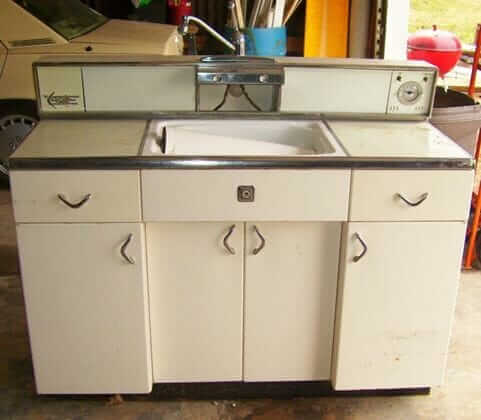
Acme steel kitchen cabinets – Wile E. Coyote would approve
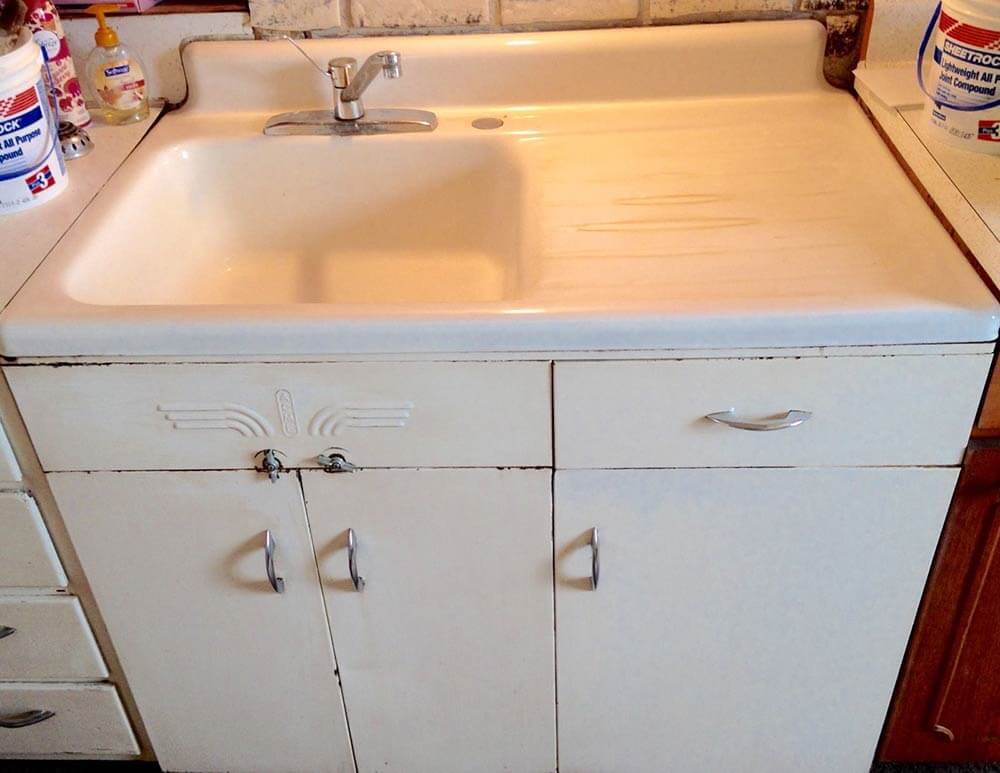
A Vintage Kitchen Sink
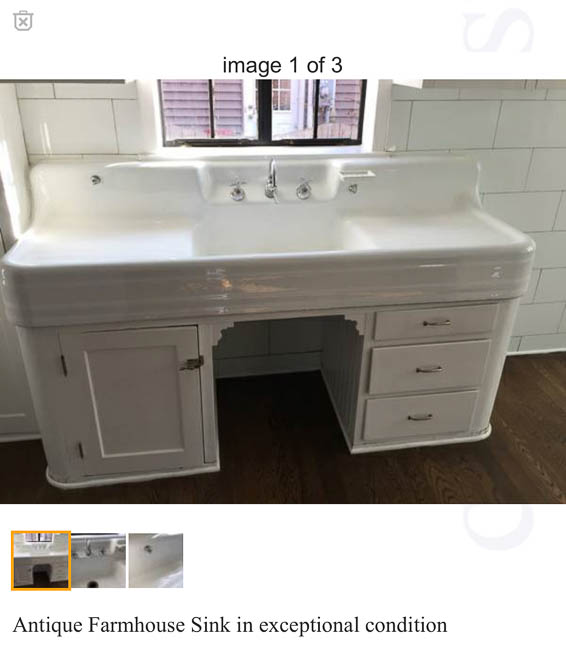
How to add vintage charm with a DIY reclaimed wood sink cabinet

Fantastic vintage sink and cabinets! Vintage sink, Metal kitchen

Vintage Kitchen Sink Cabinet, All Metal w/ Porcelain Top Elgin
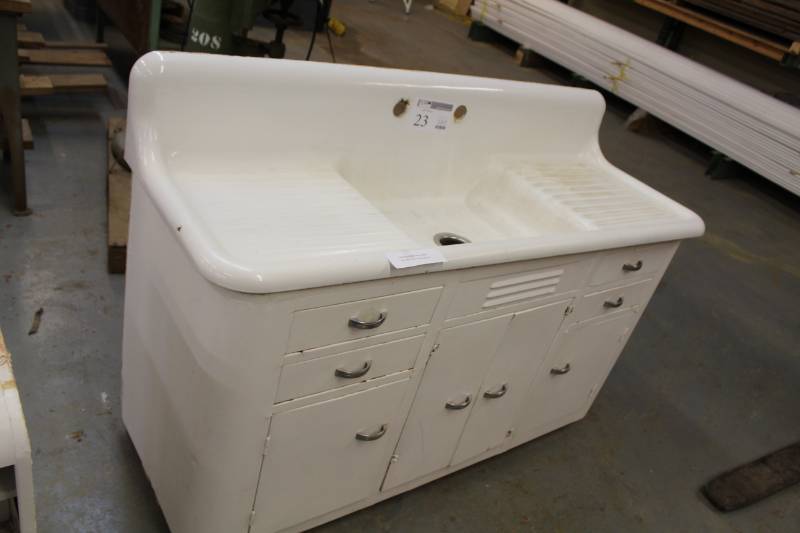
Sinks – Vintage Kitchen Sink Cabinet

Related Posts: